Modern crises—financial meltdowns, climate emergencies, pandemics, and geopolitical upheavals—have laid bare the hidden web of connections that sustain economies. What once seemed like isolated shocks now ripple through multiple sectors, revealing that prosperity cannot be measured solely by annual output. In this environment, a narrow focus on GDP misses critical dynamics. It obscures the way depleted resources, eroded trust, or technological disruption weaken our capacity to thrive. Recognizing these hidden interlinks is the first step toward building resilient, adaptive economic systems that can weather uncertainty and deliver lasting well-being.
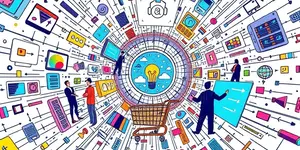
Economists and policymakers are increasingly embracing a paradigm shift: viewing wealth not as a static hoard of financial assets but as a dynamic system of capitals. This approach likens an economy to a bakery’s pantry, where ingredients represent different forms of capital. Just as the quality, variety, and quantity of pantry ingredients dictate the size and flavor of future pies, so too do physical infrastructure, human skills, environmental health, and institutional strength determine the trajectory and resilience of national and global prosperity.
Rethinking Wealth Beyond GDP
Gross domestic product measures the annual 'pie' produced, yet it says little about the pantry’s contents. A nation might record robust output while simultaneously depleting forests, eroding social trust, or neglecting critical infrastructure. Over time, such imbalances undermine growth prospects and exacerbate inequality. In contrast, an inclusive wealth framework evaluates the full suite of assets—both tangible and intangible—that underpin economic capacity. It captures whether societies are investing in or running down the vital building blocks of future well-being.
- Produced/physical capital: factories, roads, machinery
- Human capital: education, health, and vocational skills
- Natural capital: forests, water resources, biodiversity
- Social and institutional capital: governance, trust, norms
- Financial capital: assets, credit systems, investments
- Digital/data capital: networks, platforms, information flows
By outlining a ecosystem of interdependent capitals, this perspective uncovers trade-offs and synergies that GDP overlooks. It highlights that short-term gains can come at the expense of long-term stability, and that true prosperity emerges from balanced enhancement across all asset classes. Decision makers who adopt this framework can design policies that foster sustainable development while safeguarding future options.
Adopting a wealth-ecosystem lens encourages comprehensive measurement, guiding investments that strengthen the pantry rather than depleting it. This shift moves the focus from annual throughput to the health of the entire system, aligning economic policy with sustainable, equitable, and resilient growth objectives.
Global Interdependence in Trade and Value Chains
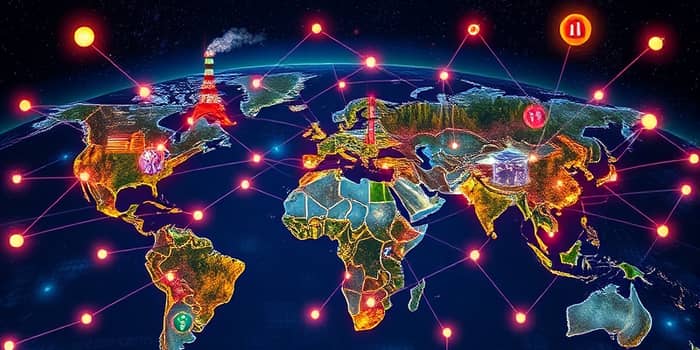
In an integrated world, no economy operates in isolation. Global value chains now span continents, with components and services crossing multiple borders before reaching final consumers. This evolution means that prosperity depends not only on domestic production but on the health of trading partners, the reliability of logistics networks, and the resilience of digital infrastructure. When one link falters, the effects propagate quickly, underscoring the importance of trusting relationships and robust supply networks.
Economic interdependence arises through diverse channels:
- Trade in goods and services across borders
- Cross-border investment and capital flows
- Global production networks and supply chains
- Technology transfers and data exchanges
Data on global value chains demonstrate that trade in tasks within production networks accounts for a growing share of economic activity. Intermediate goods now represent nearly 60% of world merchandise trade, and the import content of exports has doubled over the last three decades. As a result, policies that restrict trade or investment can backfire, damaging domestic producers and consumers alike.
Illustrating this interconnectedness, supply chain disruptions—from natural disasters to cyberattacks—can halt assembly lines thousands of miles away. Recognizing these dynamics prompts decision makers to cultivate diversification and redundancy while nurturing strong international partnerships that enhance collective resilience.
Strategic Interdependence and Geopolitical Rewiring
In recent years, the notion described as 'strategic interdependence' has reshaped global commerce. Geopolitical tensions, regulatory shifts, and security concerns now influence decisions as much as efficiency goals. This new era emphasizes multi-node networks rather than one country—structures designed to withstand shocks without sacrificing access to critical inputs or markets.
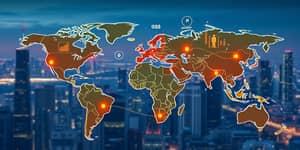
Consider the real-world metrics: China’s share of U.S. imports has fallen from 22% at its peak to 13.4% in 2024, while Vietnam’s share has doubled, and Mexico has become America’s top trading partner. Foreign direct investment flows into and out of China have plunged by over 90%, redirecting capital toward Southeast Asia, Latin America, and the Middle East. These shifts reflect a broader trend: companies and governments are hedging geopolitical risk by diversifying their economic footprints.
Such strategies involve:
- Expanding supplier bases across multiple regions
- Investing in localized production and compliance facilities
- Building inventory buffers and alternative logistics routes
- Embedding risk assessment into every stage of capital allocation
By integrating security and resilience into economic planning, stakeholders redefine wealth as resilient networks defining modern prosperity, rather than mere cost-minimized chains.
Global Flows: The Connective Tissue of Prosperity
Beyond physical goods and financial capital, two intangible currents now power global interdependence: services and data. Research shows that digital connectivity and data exchange contribute as much to growth as traditional trade did a generation ago. From cloud computing to logistics platforms, these systems knit together people, firms, and institutions across distances, creating new avenues for innovation and collaboration.
In this context, wealth ecosystems rely on flow of data and digital connectivity as much as highways and railroads. The rapid expansion of cross-border bandwidth, the proliferation of online marketplaces, and the surge in remote work all illustrate how digital linkages amplify both opportunities and vulnerabilities.
As a consequence, cybersecurity, data governance, and digital inclusion have become integral to economic policy. Investments in digital infrastructure now rank alongside roads and power grids, reflecting their centrality to sustained growth and collective resilience.
Interdependence as Vulnerability and Path to Resilience
While interdependence brings efficiency and innovation, it also creates fault lines where shocks can cascade. A localized financial crisis can trigger cross-border asset sell-offs; a regional drought can disrupt global food supplies; a cyberattack can freeze critical services worldwide. Recognizing these fault lines is crucial for building adaptive systems that can absorb and recover from disturbances.
Effective resilience strategies include scenario planning, stress tests for key sectors, and the creation of strategic reserves—whether of essential goods, energy, or digital backups. Public and private actors must collaborate to map vulnerabilities, share intelligence, and coordinate responses. By doing so, they transform interconnectedness from a liability into a strength, leveraging network effects to contain and dissipate shocks.
Crucially, resilient systems emphasize flexibility: the ability to reroute trade flows, shift production, repurpose assets, and mobilize human capital swiftly. This agility depends on robust social and institutional frameworks that foster trust, transparency, and rapid coordination.
Charting a Future of Holistic Prosperity
The rich tapestry of human, natural, physical, and digital capitals weaves the story of our collective future. By embracing a systems view, societies can align short-term needs with long-term goals, balancing growth with equity and security. This holistic approach challenges entrenched metrics and invites innovation in how we measure success, allocate resources, and build partnerships across borders and sectors.
Policymakers, business leaders, and communities stand at a crossroads: continue to pursue narrow gains or cultivate the full suite of capitals that sustain tomorrow’s opportunities. The choice is clear. Investing in an adaptive, inclusive, and resilient wealth ecosystem is not merely an academic exercise—it is the foundation for enduring prosperity in a complex, interconnected world.
As we rethink wealth, we must remember that every policy decision, corporate strategy, and community initiative adds or subtracts ingredients in the global pantry. By stewarding our collective assets wisely, we ensure that future generations inherit a world rich in possibilities, prepared to weather challenges and embrace opportunities with confidence.
References
- https://www.joinexpeditions.com/exps/361-the-wealth-economy
- https://www.cigionline.org/publications/understanding-global-interdependencies-contribution-economic-models/
- https://www.environmentandsociety.org/mml/deep-economy-wealth-communities-and-durable-future
- https://www.goldmansachs.com/insights/articles/the-financial-times-strategic-interdependence-is-rewiring-the-global-economy
- https://thepaymentsassociation.org/article/the-ecosystem-economy-a-paradigm-shift/
- https://cepr.org/voxeu/columns/global-value-chains-interdependence-and-future-trade
- https://www.youtube.com/watch?v=yVTsQaA_gK8
- https://www.intechopen.com/chapters/1206406
- https://www.tandfonline.com/doi/full/10.1080/17487870.2023.2280969
- https://www.tandfonline.com/doi/full/10.1080/09692290.2016.1268189
- https://thepossibilists.org/futureeconomy/
- https://www.mckinsey.com/capabilities/strategy-and-corporate-finance/our-insights/global-flows-the-ties-that-bind-in-an-interconnected-world
- https://www.noemamag.com/investing-in-the-ecosystems-that-sustain-us
- https://pmc.ncbi.nlm.nih.gov/articles/PMC11239037/