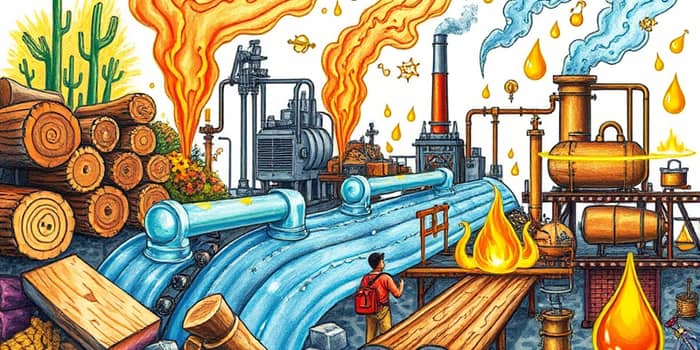
For centuries, alchemists dreamed of turning base lead into gold, pursuing hidden formulas and secret rituals. In the modern world, our laboratories are factories, our philosophers’ stones are technology and organization, and our goal remains the same: to transform low-value inputs into higher-value outputs.
Economic alchemy is not a mystical art but the tangible process of adding value at every stage—from extraction of raw materials to the hands-on refinement, and finally to packaging and distribution. When communities and nations embrace this transformative journey, they unlock productivity, create jobs, and generate sustainable prosperity.
Alchemy and the Metaphor of Value Creation
Classical alchemy relied on secrecy, guilds, and symbolic language. Modern economic alchemy operates in the open: data flows freely, best practices circulate in industry journals, and institutions foster innovation. Yet the core narrative remains evocative: converting one form of matter into another, one source of labor into creative output, one scattered resource into a cohesive system of production.
In this metaphorical frame, capital, labor, and technology serve as our philosopher’s stone. Through coordinated efforts, they can:
- Enhance efficiency via advanced machinery and automation.
- Improve skills through training and knowledge transfer.
- Optimize processes with data analytics and continuous feedback loops.
When these elements converge, they generate productivity improvements and better resource allocation, leading to higher wages, stronger communities, and resilient economies.
The Industrial Conversion Process Explained
At the heart of economic alchemy lies the manufacturing conversion process, a multi-step journey where raw inputs become consumer-ready goods. By viewing it as a multi-stage alchemical chain where value accumulates, we appreciate how each phase contributes distinct added worth.
The process unfolds in five key stages:
Each layer involves specialized skills and investments: engineers design process flows, technicians calibrate equipment, and quality managers ensure compliance. This orchestration turns simple inputs into premium products and services.
Core Elements: Inputs, Labor, Overhead
Understanding the building blocks clarifies where value arises:
- Raw materials—the tangible substances that become part of final goods, from metals and polymers to textiles and chemicals.
- Labor—skilled workers, operators, engineers, and quality-control staff applying knowledge and effort.
- Overhead—infrastructure, energy, maintenance, and administrative support that keep the transformation engine running.
By coordinating these components, firms achieve scale, consistency, and continuous improvement. Advanced digital tools enable continuous cost monitoring across the production chain, pinpointing inefficiencies and maximizing margins.
Moving Up the Value Chain: Value-Added Exports
For many economies, the initial strategy is to export raw commodities—cocoa beans, iron ore, crude oil. But reliance on unprocessed exports carries risks: price volatility, limited job creation, and low domestic retention of value. The leap from raw materials to value-added exports marks a decisive step in structural transformation.
Policies fueling this transition include:
- Investing in processing and manufacturing facilities near resource sites.
- Offering incentives for technology transfer and joint ventures.
- Developing logistics, finance, and design services to support integrated value chains.
Countries that move upstream capture more profit margins, build specialized workforces, and foster innovation clusters. South Korea’s steel and electronics industries and Chile’s copper downstream activities exemplify this strategic shift.
Art, Design, and Modern Materials Alchemy
Beyond factories, a new wave of alchemy emerges in studios and ateliers. Artists and designers resurrect discarded byproducts—slag, mining waste, plastic scraps—and through imaginative processes, create objects of aesthetic and commercial value.
In this realm, modern artists and designers draw on alchemical metaphors. They might ferment agricultural residues into bioplastics, embed pigments into recycled glass, or weave textile remnants into high-end upholstery. The narrative of transformation—waste to wonder—resonates with consumers seeking sustainability and meaning.
These creative ventures illustrate that economic alchemy extends beyond mass production. It thrives where vision meets craft, turning discarded elements into prized works and inspiring communities to reimagine the possibilities within every material stream.
Conclusion: The Promise and Responsibility of Economic Alchemy
Economic alchemy reminds us that real wealth does not spring from conjuring more money but from unlocking human ingenuity and resource efficiency. By nurturing each stage of the conversion process, fostering industrial upgrading, and celebrating creative metamorphoses, societies can forge resilient and inclusive prosperity.
As we face global challenges—from resource scarcity to environmental pressures—the alchemist’s lesson endures: transformation requires knowledge, collaboration, and ethical stewardship. With these ingredients, we can continually turn the raw materials of our world into opportunities for innovation, growth, and shared well-being.
References
- http://agoraphilia.blogspot.com/2005/06/economics-of-alchemy.html
- https://aspioneer.com/from-raw-materials-to-finished-products-exploring-industrial-processes/
- https://breakthroughgroup.com/market_watch/elementis-acquires-uk-based-alchemy-ingredients/
- https://www.youtube.com/watch?v=n4OyB_dT9Eg
- https://humanmaterialloop.com/2025/01/17/alchemy-2-0-materials-metamorphosis-and-meaning-how-a-centuries-old-quest-for-transformation-is-fuelling-todays-art-and-design-practices/
- https://digitalcommons.odu.edu/cgi/viewcontent.cgi?article=1022&context=philosophy_fac_pubs
- https://transformationsbook.substack.com/p/chapter-the-progression-of-economic
- https://capitalaspower.com/2026/03/fix-testing-the-labor-theory-of-value-with-metaphysical-alchemy/
- https://eujournal.org/index.php/esj/article/view/2013/1925
- https://discardstudies.com/2017/11/13/moving-the-circular-economy-beyond-alchemy/
- https://www.euronews.com/business/2026/05/19/from-raw-materials-to-value-added-exports-a-structural-trade-transformation