In an era defined by rapid shifts and unprecedented uncertainties, the ability to read the economic pulse in real time has never been more critical. By leveraging real-time or near-real-time indicators, organizations and individuals can anticipate changes, adapt swiftly, and forge a path toward sustainable growth.
Understanding Economic Barometers
Economic barometers are metrics that signal the health of markets at various stages. Divided into leading, coincident, and lagging categories, these indicators guide us through the fog of uncertainty by offering foresight, clarity on the present, and confirmation of past trends.
Leading indicators predict potential turning points approximately six months ahead, coincident indicators reflect the current state of economic activity, and lagging indicators validate developments after they occur. Together, they create a comprehensive toolkit for monitoring market dynamics.
Categories of Economic Indicators
A clear framework is essential for interpreting vast streams of data. The three primary categories are:
- Leading Indicators: Stock market returns, building permits, Conference Board LEI components, KOF Global Economic Barometer leading index.
- Coincident Indicators: Non-farm payrolls, personal income, GDP measurements, PMI surveys, KOF coincident index.
- Lagging Indicators: Unemployment rate and other metrics that confirm past trends.
These classifications not only help analysts but also empower business leaders to anticipate shifts amid 2026 pressures such as inflation, supply chain disruptions, and sector-specific headwinds.
Key Real-Time and Global Barometers
Several indices and tools now track economic conditions with astounding speed and breadth, offering actionable insights for proactive planning:
- Purchasing Managers’ Index (PMI): Surveys 45 economies across 30 sectors to monitor supplier deliveries, backlogs, and price pressures.
- Conference Board Indexes: LEI for early turns, CEI for current conditions, and Lagging Index for historical validation.
- KOF Global Economic Barometers: Dual indices measuring present activity and six-month outlook.
- Financial Health Barometer: A real-time US map showing consumer anxiety, food insecurity, and housing stress.
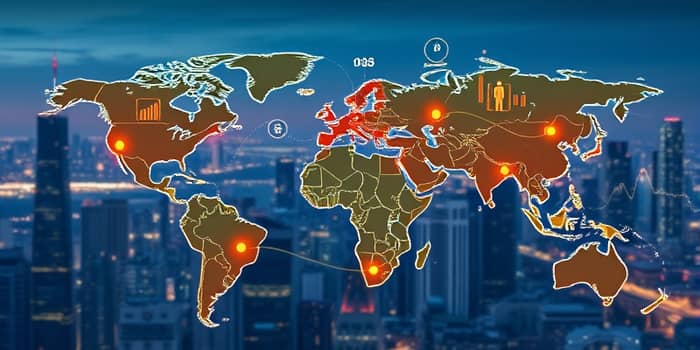
- Trading Economics Platform: Over 20 million indicators covering 196 countries, updated daily.
By combining these sources, decision-makers can triangulate signals to form a nuanced view of market health and momentum.
Case Study: Healthcare Sector Pressures in 2026
The healthcare industry exemplifies the power of economic barometers in action. As costs surge and regulations evolve, leaders rely on a mosaic of indicators to navigate volatility.
Key data points include:
- Premium Increases: A 6–9% rise, the highest in a decade, placing pressure on consumers and insurers alike.
- Hospital Margins: Stabilized but fragile, with varying performance and greater Medicare reliance.
- Executive Sentiment: 43% of healthcare leaders remain neutral or uncertain, up from 28% the prior year, with 80% citing regulatory impact.
- AI Adoption Rates: 27% of health systems and 14% of payers integrating artificial intelligence solutions over the past two years.
These figures reveal both the challenges and opportunities inherent in a sector undergoing profound digital transformation and cost pressures.
Emerging Trends and Practical Applications
As we advance into 2026, several trends and best practices stand out for leveraging economic barometers effectively:
- Integrate Multi-Source Data: Combine PMI, LEI, KOF, and financial health metrics to build a holistic dashboard.
- Monitor Consumer Stress Indicators: Use real-time maps and surveys to anticipate shifts in spending and saving behavior.
- Adopt AI-Powered Forecasting: Employ machine learning models to process high-frequency data and refine predictions.
- Stress-Test Scenarios: Simulate potential downturns using the 3Ds Rule—diffusion index and LEI growth thresholds—to gauge resilience.
- Align Strategy with Data Signals: Fast-growing GDP segments indicate expansion areas, while slowing housing starts signal tightening budgets.
By embedding these practices into regular planning cycles, organizations can stay ahead of disruptions and unlock new growth paths.
Conclusion: Harnessing Barometers for Future Success
Understanding and applying economic barometers empowers stakeholders to transition from reactive to proactive mindsets. In a landscape shaped by inflation, supply chain volatility, and evolving consumer needs, real-time metrics are invaluable guides.
Leaders who embrace continuous monitoring and agile response strategies will not only survive looming headwinds but also capitalize on emerging opportunities. By weaving economic barometers into decision-making processes, you create a dynamic roadmap toward resilience, innovation, and long-term success.
As you move forward, remember that the most powerful insight comes from connecting the dots across leading, coincident, and lagging indicators. This integrated perspective will illuminate the path ahead, ensuring you can navigate uncertainty with confidence and drive meaningful progress.
References
- https://www.spglobal.com/market-intelligence/en/solutions/economic-indicators-forecasts
- https://www.jpmorgan.com/insights/banking/investment-banking/health-care-conference-2026-trends
- https://www.bedelfinancial.com/how-to-gauge-the-health-of-the-economy
- https://www.avalonhcs.com/resources/what-to-expect-in-healthcare-in-2026/
- https://finmango.org/barometer.html
- https://www.vizientinc.com/insights/reports/annual-trends-and-forecasting-reports/2026-trends-report
- https://www.jpmorgan.com/insights/markets-and-economy/economy/10-economic-indicators-every-business-owner-should-know
- https://www.deloitte.com/us/en/insights/industry/health-care/life-sciences-and-health-care-industry-outlooks/2026-us-health-care-executive-outlook.html
- https://trendspider.com/learning-center/key-macroeconomic-indicators-your-guide-to-the-economys-health/
- https://www.ey.com/en_us/insights/strategy/healthcare-sector-outlook-in-2026
- https://www.conference-board.org/topics/us-leading-indicators/
- https://www.mastercard.com/us/en/news-and-trends/stories/2026/financial-health-survey.html
- https://kof.ethz.ch/en/forecasts-and-indicators/indicators/kof-globalbaro.html
- https://www.hfma.org/finance-and-business-strategy/healthcare-finance-trends-for-2026/
- https://tradingeconomics.com