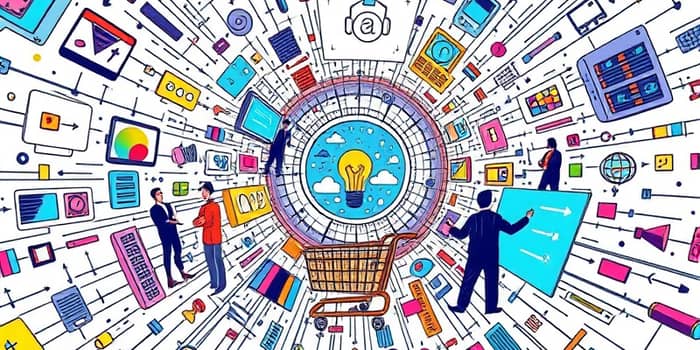
From modest online bookstores to sprawling AI-driven ecosystems, digital marketplaces have undergone a breathtaking transformation. This journey, shaped by innovation and collaboration, offers both inspiration and practical guidance for any business looking to thrive in today’s dynamic environment.
Historical Evolution: From Beginnings to Breakthroughs
The seeds of modern eCommerce were planted in the mid-1990s, when pioneers like Amazon demonstrated the power of selling physical goods online. At that time, platforms were defined by their transactional focus on physical goods and limited to B2C reselling. However, this era laid the foundational digital commerce ecosystems that would fuel future growth.
By the mid-2000s, cloud computing and digital services sparked a second wave. Marketplaces expanded beyond physical products to include software and services, bridging B2B and B2C worlds. Platforms such as AWS Marketplace and Google Play showcased how a scalable third-party seller environment could accelerate innovation and efficiency, yet they still centered on one-off transactions.
The real transformation emerged around 2021, as 5G, edge AI and IoT technologies matured. Marketplaces became collaborative hubs enabling co-creation of solutions for specific needs. Small and midsize businesses were the first to harness this power, and now enterprises follow. The emphasis shifted to fostering collaborative environments tailored to needs, where stakeholders jointly develop, refine and deliver value.
Architecture of Today’s Marketplaces
Fast-forward to 2026, and marketplaces present a Unified Multi-Business Model. A single platform might serve consumers, enterprises and SMBs alike, weaving together B2C, B2B, subscription services and IoT device management under one roof. Identity and access management systems forge seamless customer journeys from discovery to fulfillment.
At the heart of these modern platforms lie four pillars that every marketplace leader must understand:
By mastering these pillars, businesses can ensure they deliver seamless journeys across diverse segments and maintain agility in the face of evolving demands.
Riding the Waves of Growth: Metrics and Behavior Shifts
Understanding the current dynamics of digital marketplaces isn’t just academic—it’s essential for making smart strategic decisions. Marketplaces now grow at nearly four times the rate of traditional eCommerce, capturing 67% of all online sales. Meanwhile, AI referral traffic to commerce sites has multiplied twelvefold in under a year.
Consumer expectations have evolved alongside technology. Today’s shoppers seek:
- depth, curation, and specialist expertise over generic product listings,
- personalized interactions at every touchpoint, and
- AI-driven recommendations that feel like a human advisor.
Secondhand and re-commerce markets are surging as sustainability and budget concerns drive new behaviors. Over 44% of UK consumers report increased pre-owned purchases year over year, and 57% remain loyal to re-commerce channels. In this climate, authenticity verification through AI not only builds trust but creates a cost-saving competitive advantage.
Embracing Tomorrow’s Transformative Trends
The future of digital marketplaces is both exhilarating and demanding. The boundary between discovery and purchase is blurring, driven by:
- Agentic commerce and AI-driven shopping—where intelligent agents compare offers and complete transactions on behalf of buyers,
- strategic multichannel presence focused on profitability rather than ubiquity, and
- generative conversational tools that transform search into natural dialogue.
Zero-click commerce represents a paradigm shift: as AI reshapes search, merchants must adapt by optimizing product listings for algorithms, developing feeds that chatbots can parse, and offering clear, structured data. Embracing AI-friendly selling strategies and catalog health will ensure visibility in an agent-driven landscape.
Additionally, the back end is evolving. AI is migrating beyond customer-facing interfaces into inventory allocation, order routing and demand forecasting. This operational intelligence turns inventory accuracy into a direct revenue lever—reducing oversells, late shipments and cancellations, while enhancing trust and repeat business.
To deliver on the promise of hyper-personalization, marketplaces must harness advanced analytics, AI recommendation engines and dynamic content. When done right, every customer feels uniquely understood—a powerful differentiator when 67% of consumers expect personalized experiences.
Charting Your Path Forward
For businesses eager to flourish, the journey begins with assessment and ends with continuous innovation. Start by:
- Auditing current marketplace performance and customer journeys,
- Mapping out partner ecosystems to plug capability gaps,
- Prioritizing automation in billing, subscriptions and recommendations, and
- Investing in AI tools that enhance both front-end discovery and back-end operations.
Each step reinforces the four pillars and positions your platform for sustained growth. Remember, marketplaces have evolved from simple transactional storefronts into collaborative, data-driven ecosystems. By adopting a mindset of co-creation, strategic channel selection and technological readiness, you can turn complexity into opportunity.
In this era of rapid change, the true catalyst is human ingenuity guided by intelligent systems. As you harness the power of AI agents, generative tools and integrated platforms, you’ll not only meet customer expectations but exceed them, forging deeper connections and long-term loyalty.
Embrace the Commerce Kaleidoscope. Let its shifting patterns inspire new business models, unlock hidden efficiencies and spark creative collaborations. The future belongs to those who see digital marketplaces not merely as sales channels but as vibrant ecosystems where innovation and community thrive together.
References
- https://www.beyondnow.com/en/insights/blogs/the-evolution-of-digital-marketplaces/
- https://www.mirakl.com/blog/2026-marketplace-predictions-that-will-change-how-you-sell-online
- https://www.capital-commerce.com/insight/e-commerce-evolution-how-the-digital-marketplace-transformed-our-world
- https://www.publicissapient.com/resources/blog/future-ecommerce-trends
- https://courses.business.columbia.edu/B8159
- https://bernardmarr.com/7-e-commerce-trends-that-will-transform-shopping-in-2026/
- https://www.youtube.com/watch?v=DzbHftx5ht4
- https://www.digitalcommerce360.com/2026/01/06/top-15-ecommerce-trends-to-watch-in-2026/
- https://www.peterfisk.com/2025/12/trend-kaleidoscope-2026-curating-and-connecting-all-the-trend-reports-for-business-leaders-ai-acceleration-and-ambivalence-lifestyle-fluidity-and-slowbalisation/
- https://www.42signals.com/blog/2026-ecommerce-trends-forecast/
- https://www.walkersands.com/work/redefining-scholarship-management-with-kaleidoscope/
- https://mercurjs.com/resources/marketplace-trends
- https://www.fb.vnu.edu.tw/btc-Revenue-model-types-and-examples?Institutional-RWA-Shift-Navigating-the-New-Financial-...
- https://digitalmarketinginstitute.com/blog/digital-marketing-trends-2026
- https://www.jxtgroup.com/e-commerce-in-2026-key-trends-from-experts-and-what-they-mean-for-your-growth-strategy/