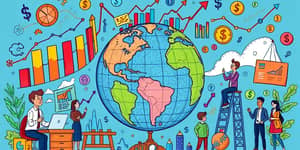
Businesses today face a pivotal question: what happens when success is measured in more than dollars and cents? This article explores how organizations redefine prosperity by balancing people, planet, and profit.
We will journey from the conceptual foundations of the triple bottom line to advanced frameworks and practical metrics. Along the way, you’ll discover how visionary companies embrace sustainability as a strategic imperative.
1. Conceptual Foundation: From Profit-Only to the Triple Bottom Line
Historically, business success was judged solely on financial performance—revenue, profit margins, and shareholder value. In 1994, sustainability expert John Elkington introduced a revolutionary idea: the the triple bottom line approach, where success is defined by social equity, environmental stewardship, and economic health.
Under this paradigm, people, planet, profit as equal pillars. Profit remains crucial, but it becomes profit is a means to sustained impact—a driver for reinvestment in communities and ecosystems. This shift requires embedding fair labor practices, resource efficiency, and ethical governance into every business decision.
- People (social pillar): Fair wages, safe conditions, inclusion, community impact.
- Planet (environmental pillar): Carbon reduction, waste management, biodiversity protection.
- Profit (economic pillar): Financial resilience, long-term value creation, reinvestment.
2. Expanding the Lens: ESG, Impact, Degrowth, and Post-Growth
ESG—Environmental, Social, Governance—has become the institutional language for investing beyond profit. Investors use ESG metrics to gauge risk exposure, non-financial performance, and long-term viability. Companies disclose greenhouse gas emissions, labor practices, board diversity, and more, building trust with stakeholders.
Yet some thinkers argue that even ESG keeps growth at the center. the planned and democratic reduction of production is a core tenet of degrowth: a deliberate strategy to lower consumption in wealthy nations, improve well-being, and reduce ecological pressure. Post-growth advocates envision an economy that thrives without endless expansion, prioritizing sustainability and equality over GDP targets.
- Democratic enterprises: smaller, not-for-profit, mission-driven governance.
- Resource limits: respecting ecological boundaries and social foundations.
- Well-being focus: health, education, equality over revenue growth.
This radical edge challenges businesses to reconsider whether growth itself should be the ultimate goal or a vehicle for broader societal benefits.
3. Why Going Beyond Profit Is Now Strategic, Not Optional
Consumer expectations, regulatory pressure, and investor scrutiny are converging. Stakeholders demand transparency on supply chains and impacts, citing social media campaigns, NGO reports, and global accords like the Paris Agreement.
Companies that lead in sustainability reporting build stronger brand loyalty, attract top talent, and foster community support. Numerous studies confirm that organizations prioritizing equity and environmental responsibility see higher employee engagement and customer retention.
Moreover, climate risks disproportionately harm vulnerable communities, making integration of diversity, equity, and inclusion essential. By embedding DEI into sustainability strategies, forward-thinking firms not only reduce social inequities but also mitigate operational risks and enhance innovation.
- Brand reputation: strengthened by authentic sustainability performance.
- Employee morale: uplifted by inclusive cultures and purpose-driven work.
- Community relations: bolstered by local investment and ethical sourcing.
4. Measuring Planet Impact: Frameworks and Metrics
Adopting a sustainability lens requires rigorous measurement. The Global Reporting Initiative (GRI) sets top-level environmental indicators—materials use, energy consumption, water management, biodiversity impact, emissions, and waste. These categories translate abstract goals into actionable topics for disclosure.
Leading companies track key performance indicators (KPIs) such as carbon footprint (CO₂e), energy intensity, water recycling rates, and waste diversion percentages. They often segment greenhouse gas reporting into Scope 1, 2, and 3 emissions to capture operational and value chain impacts.
By integrating these metrics into enterprise dashboards, sustainability leaders ensure that every department—from operations to finance—aligns with impact objectives. This data-driven approach transforms ESG from a reporting obligation into a real-time management tool.
5. Putting It All into Practice: A Roadmap for Business Leaders
Transitioning to a sustainable model demands vision, accountability, and continuous improvement. Here’s a practical roadmap:
First, conduct a materiality assessment to identify the social and environmental issues that matter most to stakeholders. Next, set clear, science-based targets with defined timelines—whether it’s net-zero carbon by 2040 or achieving zero waste in operations.
Then, embed sustainability into corporate governance. Establish dedicated roles or committees to oversee progress, link executive compensation to ESG outcomes, and integrate sustainability into every strategic plan.
Invest in capacity building: train employees on sustainable practices, foster a culture of innovation, and collaborate with suppliers to drive impact across the value chain. Leverage technology—data analytics, IoT sensors, blockchain—to monitor performance and validate progress.
Finally, communicate transparently. Publish annual impact reports, share successes and challenges, and invite stakeholder feedback. Authenticity, even when admitting setbacks, strengthens credibility and drives collective problem-solving.
By looking at the world through sustainability’s lens, businesses unlock new opportunities—operational efficiencies, brand differentiation, and resilient growth—while contributing to a healthier planet and more equitable society.
Let this be your call to action: embrace the triple bottom line, measure what matters, and transform your enterprise into a force for lasting positive change.
References
- https://www.regreener.earth/blog/the-3-pillars-of-sustainability-people-planet-and-profit
- https://braceforimpactgroup.com/sustainability-kpis-businesses/
- https://nbs.net/can-businesses-get-beyond-profit-and-growth/
- https://www.tekmon.com/resources/blog/25-esg-kpi-examples
- https://www.youtube.com/watch?v=dCdSAAoy_e0
- https://www.ppai.org/solution/environmental-sustainability-kpis/
- https://innovacap.com/sustainability/sustainability-strategy-beyond-profit
- https://www.compareyourfootprint.com/measuring-key-kpis-sustainability-business/
- https://thediversitymovement.com/beyond-profit-why-sustainability-equity-drive-business-success/
- https://www.apiday.com/blog-posts/5-esg-metrics-to-track-for-a-performing-sustainability-strategy
- https://www.hyphadev.io/blog/14-key-social-impact-esg-metrics-how-to-measure-them
- https://www.councilfire.org/blog/7-key-esg-metrics-every-business-leader-should-track
- https://novisto.com/resources/blogs/understanding-esg-metrics-definition-examples
- https://courses.ems.psu.edu/eme807/node/583