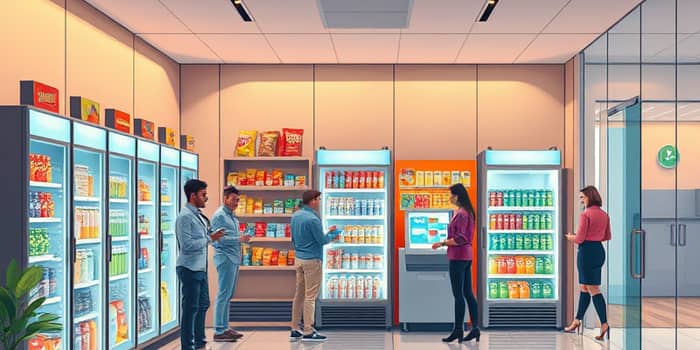
In the corner of a bustling office lobby, hidden from public view, lies a quiet revolution. Here, tiny, semi-hidden markets inside buildings are reshaping how we think about convenience, commerce, and community. Known as micro markets, these unmanned, self-service spaces blend the intimacy of a break-room pantry with the efficiency of digital payments. They stand as a testament to how microcosm of modern commerce can thrive in the smallest of exchanges.
More than a novelty, micro markets are a strategic business model and a powerful metaphor for the high-friction, high-value interactions that define today’s economy. Let’s journey into their world and discover how these miniature marketplaces have become an indispensable amenity—and a beacon of innovation.
Understanding Micro Markets: Beyond the Vending Machine
At its core, a micro market is an unattended, self-service retail space where employees or residents shop from open shelves, refrigerated coolers, and sometimes heated stations. Instead of waiting for a vendor or feeding coins into a machine, users simply scan items at a kiosk or tap a mobile wallet for instant payment.
With 150–400 distinct products—from fresh salads and frozen meals to toiletries and OTC medications—micro markets leap far beyond the 40 SKUs typical of a vending machine. They feel and operate like a compact convenience store, yet they occupy only a small footprint within a larger institution.
The Evolution from Vending to Mini Convenience
How did micro markets supersede vending machines in corporate cafeterias and residential lobbies? The answer lies in customer experience and economics. Compared to vending, micro markets offer:
- Broader product variety and fresh food options for a richer shopping experience.
- Open shelving that invites browsing, combining multiple items in one visit.
- Cashless payment systems that eliminate coin jams and change shortages.
- Average spend per transaction about 33% higher than vending machines.
This shift reflects a broader consumer demand: a desire for choice, speed, and transparency, all delivered without human staff.
Economic Powerhouse in a Small Footprint
Behind the simple facade of a micro market lies a compelling business case. Industry studies reveal remarkable returns:
In the U.S., the micro market sector is valued between $3.95 billion and $7 billion, depending on definitions and regional scope. Installations have more than doubled over the past decade, with 30,000 already in place and another 30,000 projected within five years.
Driven by profitability and growth potential, operators are investing heavily, and hosts—from tech campuses to healthcare facilities—are eager to offer this amenity to boost employee satisfaction and productivity.
Cashless Transactions: The Heartbeat of Micro Markets
What makes these unmanned setups viable? The answer is cashless payment technology. In 2023, 96% of micro market transactions were cashless, primarily via credit and debit cards. Mobile wallets and stored-value accounts further streamline the process, creating a seamless checkout that virtually eliminates theft and labor costs.
Real-time data from each transaction fuels dynamic inventory management. Restocking is optimized to match actual demand, waste is minimized, and pricing can be tweaked on the fly. The result is a lean operation that adapts to shopper preferences in near real time.
Micro Markets as Metaphor: Tiny Exchanges, Massive Impact
Beyond their physical presence, micro markets symbolize a broader shift in commerce. They illustrate how higher ease of payment and data-driven insights create value in even the smallest interactions. Each scan, each tap, becomes a node in a vast network of consumer behavior, feeding insights back to operators and transforming supply chains.
In many ways, a micro market is a miniature laboratory for the future of retail: intimate, autonomous, personalized, and efficient. They challenge us to reimagine how we engage with products and with one another, even in a brief coffee break.
Implementing Your Own Micro Market: Practical Steps
- Assess your audience and location traffic to choose the right footprint and product mix.
- Collaborate with reliable operators experienced in self-service technology.
- Invest in robust cashless payment and data analytics platforms.
- Curate products based on real-time sales data and seasonal trends.
- Promote the market internally to encourage trial and repeat visits.
By following these steps, organizations can unlock an amenity that boosts morale, reduces downtime, and generates new revenue streams.
Micro markets stand at the intersection of technology and human behavior, a testament to the power of small-scale innovation. As they continue to proliferate, these quiet corners will redefine convenience, proving that sometimes the smallest exchanges leave the biggest impact.
References
- https://en.wikipedia.org/wiki/Micromarket
- https://www.youtube.com/watch?v=o3QAEslSvq0
- https://www.bernicks.com/blog/what-are-micro-markets
- https://www.cantaloupe.com/articles/driving-micro-market-success/
- https://www.selecta.com/int/en/guides/micromarket-buyers-guide
- https://www.avantimarkets.com/what-is-a-micro-market
- https://www.micromarketmonitor.com
- https://365retailmarkets.com/why-micro-markets
- https://www.world-exchanges.org
- https://www.nayax.com/blog/mastering-micro-market-industry/
- https://www.grandviewresearch.com/industry-analysis/north-america-micro-market-report
- https://www.persistencemarketresearch.com/market-research/north-america-micro-market.asp