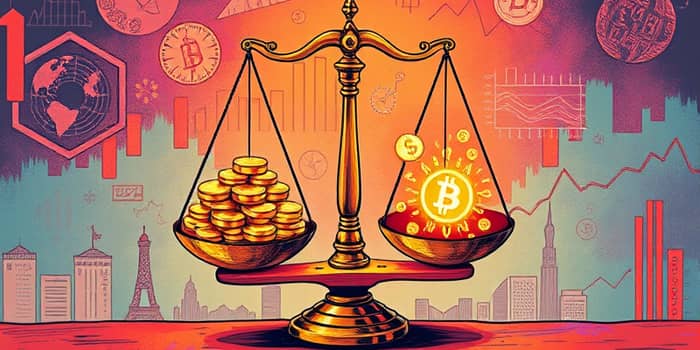
Every item we encounter in daily life carries a visible price tag. Yet beneath that number lies a deeper, often hidden layer of significance. Whether it’s a work of art fetching millions or a loaf of bread on a supermarket shelf, what something costs and what it is truly worth rarely align neatly. This tension—that visible price tag yet ambiguous value—is the heart of the price enigma, a puzzle shaped by economics, perception, culture, and countless other forces.
Decoding Price versus Value
At the most fundamental level, market value as exchange value suggests that price is simply the amount agreed upon by buyer and seller. It is an outcome stamped on a receipt, a ledger, or an auction paddle. By contrast, value is an interpretation—an assessment of utility, rarity, potential, or cultural importance. Price is what is paid; value is what the market, a buyer, or a sophisticated model believes the item deserves.
In financial terminology, market value is explicitly defined as an estimate of what an asset will trade for in current conditions. It is value in exchange, not an absolute truth that transcends context. This distinction is central to our inquiry: understanding price requires seeing it as a snapshot of myriad judgments rather than a universal constant.
The Economic Engine Behind Price
Behind every price tag lies a web of economic forces. Inflation, wages, unemployment, exchange rates, and broader supply and demand dynamics all converge to shape purchasing power and consumer behavior. In a rapidly evolving global economy, prices fluctuate because the underlying engine of production and consumption is always in motion.
- Income and purchasing power of households
- Supply and demand imbalances in goods and services
- Consumer behavior and sentiment shifts
- Business profitability and investment decisions
Key indicators such as GDP—the total value of goods and services produced in a country—and consumer spending serve as barometers of economic health. Companies monitor these metrics to anticipate changes in demand, pricing strategies, hiring, and capital expenditures. In this sense, pricing is a continuously updated signal, encoding the latest data on growth, contraction, and market sentiment.
When Markets Obscure Value: The Art Example
Few sectors reveal the enigma of price more vividly than the art market. An artwork’s price is a confluence of the artist’s reputation, historical significance, condition, and prevailing market dynamics. Beneath the surface, a host of subjective and objective market dynamics conspire to make valuation as much an art as the painting itself.
- Buyer’s premiums and inclusive pricing practices
- Presale agreements and ownership entanglements
- Use of guarantees and irrevocable bids
- Reduced transparency through private catalogs and loose disclosure rules
When a single “trophy lot” sells for over $10 million, it highlights how financialization and opacity can elevate price far beyond any straightforward measure of material or labor. In this arena, price doesn’t just reflect scarcity; it broadcasts prestige, speculation, and strategic positioning.
Modeling Fair Value in Financial Markets
While some markets thrive on opacity, financial institutions often seek to tame the enigma through rigorous modeling. In fixed-income markets, for example, fair value is estimated via proprietary frameworks like a Vector Error Correction Model (VECM). By integrating economic growth, inflation, and policy data with expert insight, these models infer the price at which sovereign debt and credit spreads should trade under prevailing conditions.
These quantitative approaches demonstrate that value is often not observed directly but inferred from the relationships among multiple economic variables. In effect, fair value modeling translates a complex, shifting economy into actionable price estimates.
Social and Cultural Dimensions of Value
Beyond economic indicators, social and cultural conditions profoundly shape what we consider valuable. Access to quality education, health care, child care, and employment opportunities varies widely across communities and feeds into broader assessments of worth—both personal and societal.
- Living wages affecting household stability
- Education and skills building determining long-term prospects
- Health care and social benefits influencing life outcomes
- Cultural norms guiding consumption and investment
In this light, price becomes a mirror of collective values and power structures. The goods and services we pay a premium for signal what society rewards—wealth accumulation, technological innovation, or cultural prestige.
Strategy: Navigating Uncertainty and Building Resilience
Given the inherent instability of value, businesses and investors must cultivate resilience. Instead of chasing a mythical “true price,” practical wisdom calls for diversified strategies that perform across different scenarios.
Financial experts suggest balancing risk exposures across growth and inflation environments rather than relying solely on traditional asset-class diversification. By stress-testing portfolios under various economic conditions, one can prepare for sudden shifts and protect against unanticipated market swings.
Conclusion: Embracing the Enigma
The price enigma reminds us that no single number can capture the full tapestry of worth. Price is an ever-changing conversation between buyers, sellers, models, and societies. It reflects not only scarcity and utility but also reputation, emotions, cultural priorities, and strategic maneuvering.
To navigate this complexity, cultivate awareness of the forces at play—economic, mathematical, social, and perceptual. Embrace uncertainty as a driver of innovation and adopt resilient strategies that honor the multifaceted nature of value. In doing so, we move beyond seeing price tags as definitive judgments and start appreciating the rich, interconnected world of worth they represent.
References
- https://www.emerald.com/jpif/article/39/5/492/450904/Pricing-to-market-market-value-the-enigma-of
- https://ca.indeed.com/career-advice/career-development/what-are-economic-factors
- https://www.theartlifegallery.com/blog/unlocking-the-enigma-of-art-valuation/
- https://www.jpmorgan.com/insights/markets-and-economy/economy/10-economic-indicators-every-business-owner-should-know
- https://zarastro.art/art-market-enigma/
- https://www.ssga.com/us/en/intermediary/insights/how-economic-factors-impact-asset-performance
- https://www.candriam.com/en-us/professional/insight-overview/publications/research-papers/the-fair-value-enigma-deciphering-fixed-income-in-todays-economy/
- https://www.countyhealthrankings.org/health-data/community-conditions/social-and-economic-factors
- https://www.richandsally.net/enigma_variations__a_novel_8356.htm
- https://www.brookings.edu/collection/how-cultural-factors-shape-economic-outcomes/
- https://www.youtube.com/watch?v=vZ5-HWos47A
- https://scholarzest.com/index.php/ejrds/article/download/306/240/712
- https://riskandinsurance.com/5-key-factors-influencing-the-global-economy-according-to-munich-res-2023-economic-outlook/
- https://www.regenerativeeconomics.earth/regenerative-economics-textbook/1-introduction-to-the-economy/1-3-society-and-the-economy/1-3-2-values-in-the-economy