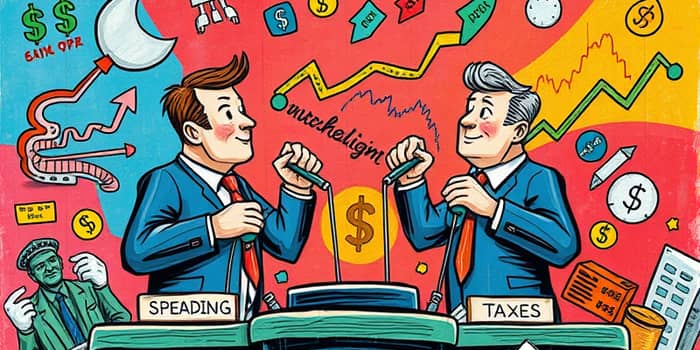
Government fiscal policy is one of the most potent tools shaping the modern economy. Through strategic adjustments in spending and taxation, governments can direct growth, influence investment decisions, and sway market sentiment. Understanding this interplay equips investors, policymakers, and citizens to navigate economic shifts with clarity and confidence.
Mechanisms Driving Fiscal Influence
At its core, fiscal policy operates through key channels of fiscal policy that transmit government actions into market outcomes. These channels determine how stimulus or restraint ripples through GDP, employment, and corporate profits.
- Government Spending: Increases can spark demand and job creation, but they may also trigger crowding out of private investment if borrowing drives interest rates higher.
- Tax Changes: Rate cuts boost consumer spending and corporate earnings, whereas hikes dampen consumption and profitability, shifting market valuations accordingly.
- Debt Issuance: Financing deficits by selling bonds affects yields, shapes term premiums, and influences borrowing costs for the private sector.
By targeting specific sectors—such as infrastructure, defense, or social transfers—governments calibrate their interventions for short-term stimulus or long-term transformation.
Understanding Fiscal Multipliers
Fiscal multipliers capture the ratio between government outlays and the resulting change in national income. They vary widely based on monetary policy stance, economic slack, and the level of government issuing the spending.
Research finds multipliers tend to be higher under accommodative monetary policy, when central banks keep rates low to support growth. Conversely, austerity measures often yield multipliers below unity.
This table highlights how context shapes outcomes. Subnational injections often yield strong local employment, while national stimuluses depend on central bank alignment.
Market Responses: Equities and Bonds
Equity markets typically react positively to spending increases, as investors anticipate higher corporate revenues and economic expansion. Conversely, tax hikes can depress share prices by eroding profit margins.
Bond markets respond indirectly. Growth expectations lift yields, while rising deficits may raise term premiums over time. Central bank expectations also adjust, as monetary policy may tighten to offset inflationary pressures.
Understanding these dynamics helps market participants adjust portfolios in anticipation of policy shifts rather than reacting after implementation.
Debt Paths and Economic Forecasts
Public debt in major economies has surged, driven by pandemic relief, social programs, and long-term commitments. In the United States, debt-to-GDP ratios are projected to approach historically high levels, fueling long-term debt sustainability concerns among analysts.
Forecasts from leading research centers indicate that moderately restrictive fiscal stances may subtract from GDP growth in the short term but help stabilize borrowing costs over decades. For example, recent data shows fiscal policy subtracted 1.3 percentage points from U.S. Q4 GDP growth, while debt service costs are expected to rise sharply by mid-century.
Policy Debates and Practical Implications
Debate continues over the efficacy and cost-effectiveness of fiscal interventions. Key themes include the balance between immediate stimulus and long-term stability, and the trade-offs inherent in different spending compositions.
- Stimulus vs. Cost-Effectiveness: Keynesian advocates argue for high multipliers, while critics point to expensive job creation and potential inefficiencies.
- Composition Matters: Infrastructure and transfers can yield significant multiplier effects on GDP, but defense outlays often fall below unity.
- Heterogeneity Across Economies: Expansionary policy triggers appreciation and depreciation of exchange rates differently in advanced versus developing markets.
By recognizing these nuanced debates, stakeholders can evaluate policy proposals with a clearer lens on risks and rewards.
Conclusion: Charting the Fiscal Future
As governments worldwide face aging populations, climate challenges, and technological shifts, fiscal policy will remain a pivotal instrument. Its design and timing will shape growth trajectories, market valuations, and investor confidence.
By applying empirical insights and monitoring equity risk premiums and term premiums, market participants can anticipate shifts and position portfolios to benefit from—or hedge against—policy-driven volatility.
Ultimately, informed engagement with fiscal footprints empowers citizens, businesses, and policymakers to forge sustainable economic paths and unlock shared prosperity.
References
- https://www.pimco.com/us/en/resources/education/learning-how-monetary-and-fiscal-policies-affect-markets
- https://www.stlouisfed.org/on-the-economy/2017/december/government-spending-stimulate-economy
- https://www.brookings.edu/articles/hutchins-center-fiscal-impact-measure/
- https://www.nber.org/digest/jan00/how-government-spending-slows-growth
- https://www.stlouisfed.org/publications/review/2024/03/07/accounting-for-the-effects-of-fiscal-policy-shocks-on-exchange-rates-through-markup-dynamics
- https://www.richmondfed.org/publications/research/economic_brief/2025/eb_25-28
- https://budgetlab.yale.edu/research/estimating-dynamic-economic-and-budget-impacts-long-term-fiscal-policy-changes
- https://www.cato.org/blog/reducing-spending-now-key-growth-not-austerity
- https://www.imf.org/en/publications/fandd/issues/series/back-to-basics/fiscal-policy
- https://www.cbo.gov/topics/economy/economic-effects-fiscal-policy