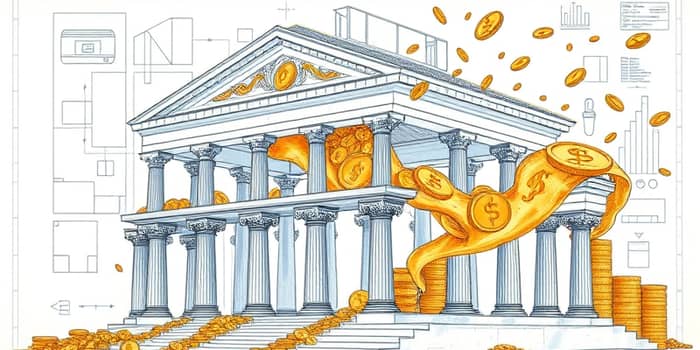
In today’s uncertain world, having a single paycheck can feel precarious. By embracing the role of an income architect, you can move beyond fragile earnings to a deliberately engineered, multi-source, resilient cash-flow system. This blueprint shows how to build strong foundations, add diversified income streams, and implement disciplined rules so money arrives predictably—even when challenges arise.
Understanding Income Architecture
Income architecture is a framework for shaping your financial future like a building design. Instead of hoping for stability, you craft a plan that ensures cash flows reliably, regardless of economic shifts.
Think of the foundation as an emergency fund and stable income sources, structural supports as diversified streams of earnings, stress-testing as scenario planning, and renovations as periodic reviews. Each element works together to create a cohesive, long-lasting design.
The Three-Flow Cash-Flow Design
At the heart of income architecture lies a model of three distinct flows. By learning to allocate to flows before covering expenses, you prioritize stability and growth rather than saving what remains.
With a sample split of 60% operating, 20% reserves, and 20% growth, you establish a layered portfolio by risk and liquidity. Adjust these percentages as your life stage, income stability, and goals evolve.
Building Diverse Income Streams
Relying on one employer or client creates vulnerability. Instead, aim for multiple active and passive income streams that complement each other and provide redundancy.
- Financial investments: dividend-paying stocks, bonds, REITs
- Real estate: long-term rentals, short-term rentals, real-estate funds
- Business ventures: freelancing, consulting, online shops, franchises
- Royalties: books, software, courses, patents
- Peer-to-peer lending: interest from personal or SME loans
Introduce one new stream at a time, nurture it to stability, then layer the next. This disciplined approach acts as a buffer against financial uncertainties, ensuring you’re never overly dependent on a single source.
Rules of Thumb for Consistency and Growth
Establishing guidelines helps maintain smooth cash flow and avoid surprises. A common target is a 3–6 months of essential expenses reserve for personal finances, while businesses often aim for 3–6 months of operating costs in cash reserves.
For long-term independence, follow withdrawal rules such as the 4% rule: take 4% of your retirement portfolio in year one, then adjust for inflation. Alternatively, use guardrails, limiting annual withdrawals to 3–5% based on market conditions.
In retirement planning, a bucket strategy segments assets by horizon: short-term cash for 1–3 years of withdrawals, medium-term income-producing investments, and long-term growth vehicles. These portfolio-level designs mirror different architectural styles suited to evolving needs.
Implementing Cash-Flow Management Systems
Even the best design fails without proper systems. Leverage automated transfers and pre-allocation strategies to route income to operating, reserve, and growth accounts before you ever see the balance.
- Regular budgeting and expense tracking to distinguish essential vs discretionary costs
- Automatic transfers: pay yourself into reserves and investment accounts first
- Fixed monthly draw for irregular income earners to simulate a steady paycheck
- Separate accounts for essentials, reserves, and long-term investments
- Periodic reviews to realign allocations with changing goals and circumstances
Freelancers and retirees can funnel all irregular income into a holding account, then pay yourself first through automation, directing excess to reserves and growth once your “salary” is met.
- Monitor cash balances with weekly or monthly statements and dashboards
- Track metrics: receivables days, payables days, and operating cash-flow margin
- Build business reserves to cover at least three months of fixed costs
- Optimize invoicing and payment schedules to improve cash conversion
- Stress-test designs with best, expected, and worst-case financial scenarios
By maintaining separate accounts for reserves and investments, you preserve clarity and discipline, preventing funds from blurring together and ensuring each flow serves its purpose.
Ultimately, income architecture is an ongoing process, not a one-time project. Regularly assess your design, reinforce weak areas, and embrace new opportunities to expand and fortify your cash-flow structure. With intention and adaptability, you can create a system that withstands storms, supports growth, and delivers lasting peace of mind.
References
- https://familyfinancialpartners.com/designing-cash-flow-that-supports-your-life/
- https://www.thebankofelkriver.com/blog/cash-flow-management-tips-for-maintaining-a-healthy-cash-flow-in-your-business
- https://paradigmlife.net/how-to-generate-cash-flow/
- https://williamskeepers.com/six-ways-to-strengthen-your-cash-flow-management-strategy/
- https://www.levelset.com/blog/cash-flow-guide-architects/
- https://www.kmco.com/insights/how-businesses-can-improve-cash-flow-6-strategies-for-success/
- https://floydfinancialgroup.com/creating-consistent-cash-flow-in-retirement-without-overspending/
- https://www.highradius.com/resources/Blog/strategies-to-increase-cash-flow/
- https://www.youtube.com/watch?v=E-eafuVCz3w
- https://www.brex.com/spend-trends/cash-flow-management/improve-business-cash-flow
- https://xangoaccounting.com/post/6-tips-for-cash-flow-management-in-architecture-firms
- https://www.coursera.org/articles/passive-income
- https://www.actioncoach.com/articles/top-15-tips-to-improve-cash-flow-management
- https://communityhub.aia.org/blogs/jennifer-c-kretschmer-aia/2026/01/15/passive-income-for-architects