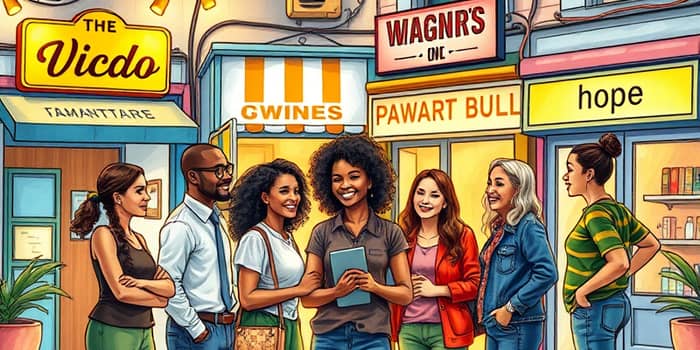
In a world where billions remain unbanked, microfinance emerges as a catalyst for change, offering tailored financial services to those at the margins.
Defining Microfinance and Its Scope
Microfinance encompasses a variety of financial services designed to support individuals and microenterprises that traditional banks often overlook. At its core lies microcredit and savings instruments that empower entrepreneurs to pursue their ambitions. In addition to pioneering small loans, many providers deliver financial literacy and business training, ensuring clients gain the skills needed to thrive. These services include:
- Low-income entrepreneurs and informal-sector workers
- Women-led businesses in developing countries
- Rural and remote communities with limited banking access
- Underserved regions in both developing and developed economies
The Evolution of Microfinance
The modern concept traces back to Bangladesh in the 1970s, where Muhammad Yunus founded the Grameen Bank and introduced group-lending schemes focused on women. Early initiatives were largely early donor-funded social projects, offering hope of a silver bullet against poverty. Over decades, microfinance institutionalized, spawning specialized microfinance institutions (MFIs), commercial microfinance banks, and eventually integrating with digital finance and mobile banking platforms. This progression illustrates the sector’s resilience and adaptability, responding to the needs of diverse communities.
As the industry matured, its scope widened beyond microcredit to include microinsurance, payment and remittance systems, and structured savings accounts. Clients now access products tailored to their local contexts, from weather-indexed crop insurance in rural areas to digital wallets in urban slums. Despite challenges, this evolution highlights a shift from charity to sustainable, market-driven solutions that seek both social impact and financial viability.
Global Market and Unmet Demand
Globally, around 2 billion adults lack access to a bank account or digital financial tools, while over 200 million small businesses face financing gaps. Since its inception, microfinance has reached an estimated 500 million people, with more than 70 million current borrowers and a combined loan portfolio approaching $40 billion.
Despite these advances, microfinance has tapped only about 20% of its potential market. An estimated 400 million people qualify for microcredit but remain excluded due to infrastructure and regulatory barriers. A further 2.4 billion individuals could benefit from basic financial services if access and awareness improved.
Mechanisms That Empower Small Businesses
Microfinance drives economic empowerment through multiple channels, each addressing specific barriers to growth.
- Access to credit and working capital helps microentrepreneurs invest in inventory, equipment, and day-to-day operations when traditional banks see them as high risk.
- Providing an alternative to predatory lending practices reduces exposure to usurious interest rates and abusive collection methods.
- Micro-savings accounts allow clients to build emergency buffers and plan for expansion.
- Microinsurance products mitigate risks from health crises, weather shocks, and market disruptions.
- Non-financial services and capacity building reinforce long-term viability and resilience through bookkeeping, marketing, and strategic planning support.
- Group-lending models foster network and social capital, creating peer support systems and shared accountability.
These mechanisms combine to offer more than capital. By integrating educational support with financial services, MFIs enable entrepreneurs to navigate challenges, identify growth opportunities, and sustain their ventures over time.
Socioeconomic and Gender Dimensions
Microfinance sits at the intersection of finance and development, promoting inclusive development and financial inclusion. Research indicates modest but positive impacts on income, business investment, and household resilience. While not a cure-all for poverty, microfinance fosters incremental improvements in living standards and occupational diversity.
Women account for a majority of microfinance clients in many regions. Access to credit often translates into greater autonomy, enhanced decision-making power, and improved family welfare. Outcomes include:
- Increased control over household income and spending decisions
- Enhanced bargaining power and social status within communities
- New opportunities for education and health investments
By targeting women entrepreneurs in underserved communities, MFIs contribute to broader gender equality and community development goals.
Regional Perspectives and Success Stories
India’s Self-Help Group (SHG) model showcases how collective action can amplify impact. Millions of rural women join SHGs, pooling savings and accessing group loans to start ventures in agriculture, textiles, and retail. These groups benefit from peer training, shared risk, and local governance structures that bolster repayment rates and social ties.
In sub-Saharan Africa, institutions like the European Investment Bank support microloans to agribusinesses and small traders, often combining financing with technical assistance in crop management and market access. Such programs enhance food security and job creation while promoting sustainable agricultural practices.
Latin America leverages mobile technology to expand reach. Digital wallets, agent networks, and real-time transaction data have enabled MFIs to serve remote entrepreneurs with lower operating costs. Countries like Peru and Mexico report rapid borrower growth and high client satisfaction due to these innovations.
Looking Ahead: The Future of Microfinance
The microfinance sector stands poised for further transformation. Projections suggest the market could double by 2030, driven by growing demand in emerging economies and technological innovations in fintech. Mobile banking, blockchain-based credit histories, and AI-driven risk assessment promise to streamline lending processes and reduce costs.
However, scaling responsibly requires addressing regulatory gaps, strengthening consumer protection, and ensuring interest rates remain sustainable. Partnerships between governments, NGOs, and private investors will be critical to bridging infrastructure deficits and expanding financial literacy programs.
Conclusion
Microfinance remains a powerful tool for empowering small businesses and fostering resilient economies. By combining tailored financial products with capacity building, it unlocks opportunities for millions, transforming not only individual livelihoods but entire communities. As the sector continues to evolve, stakeholders must collaborate to harness its full potential, ensuring that every aspiring entrepreneur has the chance to succeed.
References
- https://eprajournals.com/IJCM/article/16157
- https://socialjusticeresourcecenter.org/facts-and-figures/microfinance-facts-figures/
- https://www.ibef.org/blogs/microfinance-in-india-empowering-small-businesses-and-entrepreneurship
- https://fitsmallbusiness.com/microfinance-statistics/
- https://www.projects-abroad.org/blog/how-microfinance-empowers-disadvantaged-communities/
- https://economics.umbc.edu/files/2020/11/Sayer-Niblett-Final-Capstone-2.docx
- https://poverty-action.org/impact/evidence-microcredit-rethinking-financial-tools-poor
- https://gocardless.com/guides/posts/microfinance-for-small-business/
- https://ieg.worldbankgroup.org/reports/microfinance-critical-literature-survey
- https://www.weforum.org/stories/2024/09/microfinance-is-empowering-underserved-communities-in-the-gcc/
- https://en.wikipedia.org/wiki/Microfinance
- https://finca.org/our-work/microfinance
- https://academic.oup.com/oxrep/article/40/1/1/7630840
- https://mutualism.co.za/advantages-of-microfinancing-for-small-businesses-in-south-africa/