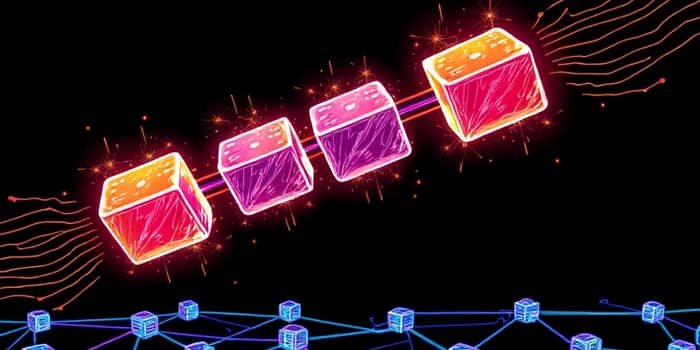
In a world where digital trust often hinges on third parties, blockchain emerges as a beacon of innovation and security. This technology reshapes the way we record, share, and protect data, ushering in an era where transactions are transparent, tamper-proof, and free from central oversight. Understanding blockchain is no longer optional—it is essential.
What Is Blockchain and Why It Matters
At its core, blockchain is a decentralized, distributed digital ledger that records transactions in a secure and transparent manner. Unlike traditional databases managed by central authorities, a blockchain spreads its data across a network of computers, or nodes, ensuring that no single entity can alter records without consensus.
Each record, or block, contains a batch of transactions along with a unique identifier known as a hash. This hash links one block to the next, forming a immutable and secure without a central authority chain. Any attempt to tamper with a block instantly breaks the link, alerting the network to inconsistencies.
How Blockchain Works: A Step-by-Step Guide
The process of adding information to a blockchain follows a clear, six-step cycle, ensuring accuracy and trust.
First, a user initiates a transaction by broadcasting it to the network. These transactions, which might involve cryptocurrency transfers or shipment details, gather in a pool awaiting validation. Next, miners or validators group these transactions into a new block, preparing it for verification.
Nodes across the network then receive copies of this candidate block. Through public and private keys and cryptographic proofs, they verify each transaction’s authenticity and integrity. Consensus mechanisms, such as Proof-of-Work (PoW) and Proof-of-Stake (PoS), determine which validator earns the right to add the block to the chain.
Once validated, the block receives a timestamp and its hash, along with the previous block’s hash. This transactions bundle into a block and link ensures that every entry is connected chronologically. Finally, the updated ledger propagates to all nodes, confirming the new state and strengthening the entire network.
Key Components and Technical Deep Dive
Understanding the technology beneath the surface reveals why blockchain is so resilient and flexible. Two consensus models dominate the landscape:
Behind these mechanisms lie cryptographic functions that pseudonymize participants and protect data. A minor change in input generates a drastically different hash, making any tampering instantly detectable. The combination of hash functions, node replication, and consensus turns blockchain into a distributed, fault-tolerant and censorship-resistant system.
Security, Immutability, and Trust
One of blockchain’s most celebrated traits is its tamper-proof nature. Altering a single block requires re-mining or re-validating not just that block but all subsequent blocks—a near-impossible task without controlling the majority of network resources.
This security paradigm removes the need for central intermediaries, as trust shifts from institutions to the protocol itself. Users interact with a mathematical guarantee rather than a third-party promise, fostering a truly peer-to-peer, trustless network architecture that scales across industries.
Real-World Applications Beyond Cryptocurrency
From tracking the provenance of artisanal goods to automating insurance claims via smart contracts, blockchain’s ability to establish trust in permissionless environments is revolutionizing traditional business models and redefining efficiency standards worldwide.
- Supply Chain Tracking: Ensuring product provenance with immutable records.
- Digital Identity: Secure and user-controlled authentication systems.
- Intellectual Property: Protecting creators through timestamped ownership.
- Decentralized Finance: Lending, borrowing, and investing without banks.
Challenges and the Road Ahead
Despite its promise, blockchain faces hurdles that must be addressed to achieve mainstream adoption.
- Energy Consumption: Especially in PoW networks, mining can drive high electricity demand.
- Scalability: Balancing speed and decentralization remains an ongoing quest.
- Regulatory Uncertainty: Evolving legal frameworks create ambiguity for developers and users.
The Future of Blockchain Technology
Technological evolution continues to refine blockchain’s design. Innovations like layer-two solutions, sharding, and hybrid consensus models promise higher throughput and lower costs. Networks are transitioning from energy-intensive approaches toward greener alternatives, with PoS and delegated mechanisms gaining traction.
As enterprises and governments experiment with permissioned blockchains, interoperability standards are emerging. Bridges between chains, cross-chain smart contracts, and modular architectures hint at an interconnected ecosystem where data flows securely across platforms.
Ultimately, blockchain represents more than a technical novelty—it embodies a shift toward democratic control of information and value. By championing transparency, resilience, and inclusivity, this technology sets the foundation for a more equitable digital future.
Whether you are a curious developer, a business leader, or simply someone intrigued by the possibilities to reimagine how people collaborate and exchange value, the blockchain journey offers a path to global innovation.
References
- https://cardanofoundation.org/blog/blockchain-basics-simple-guide-beginners
- https://www.youtube.com/watch?v=SSo_EIwHSd4
- https://coingeek.com/blockchain101/blockchain-basics-key-things-to-know-as-a-beginner/
- https://www.khanacademy.org/computing/code-org/x06130d92:blockchain-technology/x06130d92:how-blockchain-works/v/how-blockchain-works-under-the-hood
- https://stellar.org/learn/blockchain-basics
- https://londonblockchain.net/blog/blockchain-explained/blockchain-for-beginners-all-you-need-to-know-to-get-started/
- https://www.ibm.com/think/topics/blockchain
- https://www.dummies.com/article/business-careers-money/personal-finance/cryptocurrency/what-is-a-blockchain-and-how-does-it-work-262432/
- https://aws.amazon.com/what-is/blockchain/
- https://www.blackduck.com/glossary/what-is-blockchain.html
- https://www.youtube.com/watch?v=w_Q9Ska_DLw