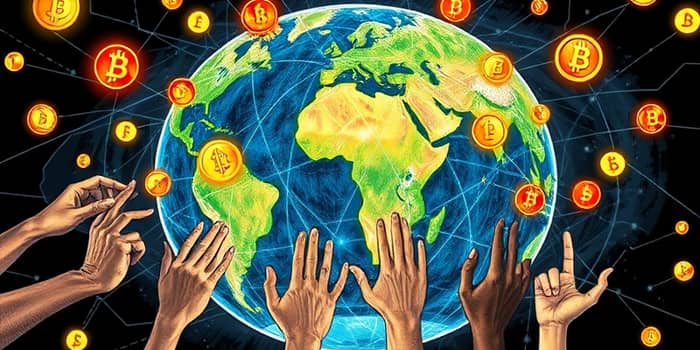
In a world where commerce pulses through invisible veins of technology and trust, we stand at the confluence of history and innovation. Trading goods and services has always been about more than objects: it is the lifeblood of human connection, economic progress, and social cohesion. From the first barter deals under ancient skies to instantaneous digital payments across continents, each leap has removed a layer of friction, driving us toward a truly seamless flow of exchange.
The progressive removal of transactional friction has defined our economic story. As we move beyond simple barter, modern systems meld algorithms, reputation networks, and decentralized ledgers to realize exchanges once thought impossible. This article traces that arc and offers practical guidance to navigate and benefit from today’s fluid exchange landscape.
The Evolution of Exchange: From Barter to Commodity Money
Barter represents humanity’s initial attempt to satisfy needs through direct trades of goods and services. Despite its cultural romanticism, barter suffered from the double coincidence of wants—each party had to desire exactly what the other offered. Further obstacles like indivisibility of goods and perishability made transactions cumbersome and limited in scope.
To overcome these constraints, societies adopted commodity money—grains, shells, metals—that commanded broad acceptance. Standardized metal coins introduced by ancient empires granted durability, portability, and a common measure of relative value. Later, paper currency and banknotes evolved from deposit receipts, cementing the concept of a state-backed medium of exchange. The shift to fiat money, untethered from gold reserves, underscored money’s function as a social contract rather than an intrinsic commodity.
Digital and Electronic Payments: Invisible Transactions
The arrival of electronic payments in the 20th century ushered in a new era of convenience and speed. Debit and credit cards, automated clearing houses, and online banking systems transformed how we pay, enabling borderless, frictionless digital payments that operate around the clock. Billions now shop, remit funds, and settle invoices without touching physical currency.
Behind the scenes, payment processors, banks, and regulators maintain trust and security through encryption, escrow services, and fraud monitoring. Real-time transaction clearing and settlement have edged us closer to the ideal of invisible exchange—where value flows seamlessly, reliably, and instantaneously.
Reducing Friction in Modern Exchange Systems
This comparison highlights how modern infrastructure, from cloud platforms to distributed ledgers, tackles each archaic friction point. What once required days or weeks of negotiation now finalizes in seconds, empowering individuals and businesses with unprecedented agility.
Beyond Traditional Money: Cryptocurrencies and Mutual Credit
More recently, cryptocurrencies have entered the arena, promising crypto and decentralized ledger systems that operate independently of traditional banking. Bitcoin’s blockchain introduced the idea of a trustless network where consensus and cryptography replace centralized authorities. Programmable tokens and smart contracts further extend possibilities—automating conditional payments and customizable escrow in code.
Parallel to this, mutual credit networks create a social layer of exchange. Members earn or spend credits within a closed group, with balances clearing internally rather than through cash. By internalizing trust and credit within a network, these systems represent a sophisticated evolution of reciprocal exchange, blending monetary and community-based models.
Practical Steps to Engage in Modern Exchange Networks
- Identify your tradable assets—goods, services, or skills—and what you need in return.
- Research approximate market values using online listings and real-time price data.
- Find trading partners via digital platforms, local exchange networks, or mutual credit communities.
- Negotiate clear terms, setting dates, locations, or digital channels for safe settlement.
- Leverage escrow services or smart contract templates to protect both parties and automate fulfillment.
By following these steps, individuals and small businesses can harness modern exchange mechanisms, reducing reliance on cash flow while unlocking new opportunities for growth.
The Future: Towards Seamless, Trustless Global Trade
As technology advances, we edge closer to a world where value moves as effortlessly as information. Artificial intelligence will optimize matching algorithms, while identity and reputation protocols ensure secure, pseudonymous trust. Central bank digital currencies (CBDCs) and cross-chain interoperability promise to unite fragmented systems into a cohesive, global network of instantaneous transfers.
Imagine subscription economies where micro-payments settle automatically per usage, decentralized autonomous organizations coordinating trade across borders, and digital wallets seamlessly shifting between fiat, tokens, and loyalty points—all in one unified interface. The future of exchange is not just faster or cheaper; it is deeply integrated into our everyday lives, invisible yet indispensable.
Conclusion: Embracing the Flow
From cowry shells to blockchain blocks, the narrative of exchange is one of relentless innovation and adaptation. Each new mechanism has peeled away layers of friction, expanding the scale and scope of economic interaction. Today, we stand at a pivotal moment: empowered by technology, guided by trust networks, and inspired by the vision of truly seamless exchange.
Whether you are a small entrepreneur bartering excess inventory or a global institution exploring programmable money, the principles remain the same: value is created when needs meet resources, and institutions are strongest when trust flows freely. By embracing modern exchange tools and practices, we participate in a dynamic ecosystem that transcends borders, elevates communities, and propels humanity toward its next frontier of collective prosperity.
References
- https://www.youtube.com/watch?v=Cv_bSEnrPtE
- https://www.iscripts.com/blog/barter-economy/
- https://cuwebtraining.com/Journey-from-Trading-to-Cryptocurrency
- https://beyondmoney.net/2012/01/04/taking-cashless-trade-to-a-higher-level/
- https://www.nber.org/papers/w8963
- https://ideas.repec.org/b/wsi/wsbook/12488.html
- https://www.mastercard.com/us/en/news-and-trends/Insights/2023/the-evolution-of-exchange.html
- https://fynk.com/en/blog/bartering-guide-successful-trade-exchange/
- https://sociology.institute/economic-sociology/evolution-exchange-systems-history/
- https://en.wikipedia.org/wiki/Barter
- https://www.bankofcanada.ca/2009/11/evolution-international-monetary-system/
- https://hycm.com/en/blog/forex-market-history/the-evolution-of-the-forex-market