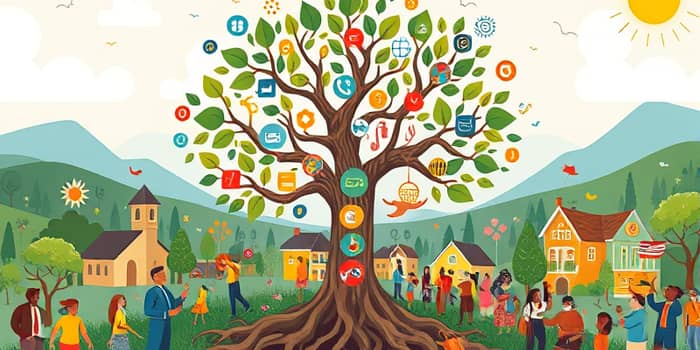
In a world driven by shifting economic tides, understanding that true wealth extends beyond bank balances can be transformative. This guide unveils how to cultivate a resilient, interconnected network of personal and external resources—your very own wealth ecosystem. By aligning health, relationships, purpose, and practical strategies, you can achieve sustainable prosperity.
Embracing a Holistic Wealth Approach
A wealth ecosystem integrates both internal influences—how you feel about money, your health and purpose—and external factors such as work, financial education, and spending habits. Recognizing these connections empowers you to make informed choices that resonate with your values.
Start by reflecting on your current relationship with money. Consider journaling prompts like “What does abundance feel like?” or “How do I prioritize my well-being?” With each insight, you move closer to creating balanced mental, emotional, spiritual, and physical alignment—an essential step for lasting growth.
The Seven Pillars of Lasting Prosperity
Every robust wealth ecosystem stands on seven pillars that support and enhance one another. By nurturing each area, you reinforce the structure of your financial journey.
- Health: Cultivate mental clarity, emotional resilience, and physical vitality.
- Relationships and Money Influence: Surround yourself with mentors and peers who model healthy financial habits.
- Time and Energy: Protect your schedule to balance work and leisure.
- Financial Literacy and Education: Commit to continuous learning through books, courses, and mentors.
- Work and Career Equity: Seek opportunities that align skill, passion, and fair compensation.
- Environment: Design a space that fuels productivity and well-being.
- Spiritual Purpose and Identity: Anchor your actions in a clear vision of your mission.
For each pillar, set small, measurable goals. Whether scheduling annual health checkups, dedicating weekly time to learning new financial concepts, or redesigning your workspace, these actions create momentum toward sustainable prosperity built over time.
Strategic Financial Planning Elements
Beyond the foundational pillars, tactical planning ensures your wealth ecosystem thrives under every market condition. Incorporate these five elements:
- Diversified Investments: Build diverse streams of passive income with stocks, bonds, real estate, and funds.
- Comprehensive Insurance: Protect yourself with health, disability, and life coverage.
- Retirement Strategy: Align assets with your life stage to maximize compound growth.
- Trust and Estate Planning: Secure your legacy and simplify wealth transfer.
- Tax Management: Optimize deductions, credits, and legal strategies for efficiency.
By revisiting your portfolio quarterly, consulting professionals when needed, and adjusting to life changes, you ensure each element functions optimally within your ecosystem.
Adapting Across Life Stages
Financial priorities shift as you move through life. Tailor your approach to meet evolving needs.
Life Stage 1: Nurturing Prosperity, Family, and Dreams requires building capital, managing debt, and establishing an emergency fund. Focus on investing in yourself for long-term gains.
Life Stage 2: Career Pinnacle and Midlife Harmonies invites you to refine work-life balance, maximize employer benefits, and amplify compound interest. Protect your time and energy as if it were currency.
Life Stage 3: Retirement and Preserving Wealth emphasizes generating income from existing assets, estate planning, and philanthropy. This phase celebrates the fruits of decades of disciplined action.
Regardless of your stage, adopt a mindset of adaptability. Whenever change arises—new job, family expansion, or health shifts—reassess your ecosystem to maintain resilience.
Building Your Personal Wealth Hub
Your wealth advisor or personal system should act as a coordinating hub, assembling specialists and resources around you. By maintaining clear communication among service providers, you reduce gaps and overlaps that erode value.
Implement tools and platforms that integrate your data—budgets, calendars, and progress trackers—into a centralized dashboard. This unified view strengthens your ability to make informed, timely decisions.
Nurturing Community and Regional Prosperity
Wealth creation flourishes not only at the individual level but within communities. Rural development hubs and local partnerships can drive economic growth that benefits all stakeholders.
By recognizing and leveraging communal assets—natural resources, cultural heritage, local businesses—you foster multiple revenue streams and resilient value chains. Collaborative projects, like artisan cooperatives or sustainable agriculture initiatives, exemplify how shared prosperity elevates every member of the ecosystem.
Begin by mapping local strengths, then collaborate with neighbors, regional advisors, and digital platforms to amplify impact. This communal approach mirrors the personal wealth hub model, scaled to nurture entire regions.
In the end, building a wealth ecosystem is a journey of integration. It demands attention to health, relationships, education, and purpose—woven together by sound planning and community spirit. As you embark on this path, remember to celebrate milestones, recalibrate when challenges arise, and maintain the vision of enduring abundance. By cultivating each pillar and fostering collaboration, you lay the groundwork for financial growth that uplifts you and those around you.
References
- https://www.morganblackman.com/blog/what-is-a-wealth-ecosystem
- https://www.boh.com/wealth/blog/5-elements-of-a-financial-plan-for-effective-wealth-management
- https://stockcake.com/i/nurturing-financial-growth_2951270_1607033
- https://www.nefe.org/initiatives/ecosystem/default.aspx
- https://cliffordswan.com/wealth-planning/nurturing-prosperity-the-journey-of-wealth-management-across-lifes-stages/
- https://www.ey.com/en_us/insights/wealth-asset-management/how-wealth-and-asset-managers-can-leverage-ecosystems-to-catalyze-growth
- https://www.youtube.com/watch?v=eFZT6hTwfcI
- https://www.youtube.com/watch?v=qKsDnYKmVIg
- https://www.youtube.com/watch?v=lJzex2Gfnqc
- https://mdinnovationcenter.com/nurturing-growth-the-interconnected-components-of-a-thriving-support-ecosystem/
- https://bitterrootcapital.com/uhnw-investors/preparing-for-whats-ahead/ecosystem/
- https://www.wealthmanagement.com/ria-news/the-evolving-wealth-management-ecosystem
- https://www.wavespartnership.org/en/wealth-accounting-and-WAVES
- https://www.pwc.ch/en/insights/fs/new-ecosystems-in-wealth-management.html