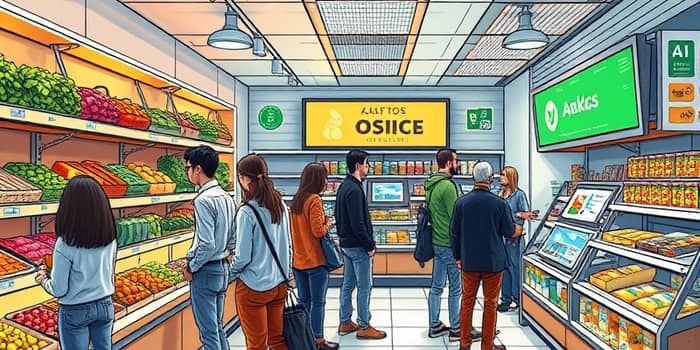
Over the past decade, micro-markets—unattended, open-shelf retail setups in offices, apartments, and public venues—have experienced an unprecedented rise. Fueled by cashless technology and AI analytics, these compact stores deliver higher ticket values than traditional vending. As operators expand into hotels, hospitals, and educational campuses, micro-markets are reshaping consumer habits. By examining what sells, when, why, and at what profit, we unlock a narrative that blends data-driven insights, operator strategies, and market forecasts, revealing the mechanisms behind this retail revolution.
The Surge of Micro-Markets: A New Retail Era
In 2022, the North American micro-market industry was valued at USD 3,950.4 million. Projections by Persistence Market Research forecast this figure swelling to USD 29.0 billion by 2033, reflecting a compound annual growth rate of 10.2% from 2026 to 2033. Earlier estimates suggested a 13.0% CAGR from 2023 to 2030, underscoring consistent expansion. Sales volumes surpassed $1 billion in 2024 alone, marking a 27% year-over-year jump. Location growth soared by 36%, while new site additions climbed 28%. With a penetration rate approaching 40% among facilities with over 100 employees, micro-markets have become a mainstream retail channel.
The average ticket size in micro-markets reached $2.67 in 2024, a 4.8% year-over-year increase. This figure stands 120–180% higher than vending machines and over 100% above spend levels in Smart Stores, as reported by Cantaloupe and Manovix. Such metrics highlight the impulse purchases drive growth that characterize unattended retail environments.
Deciphering Transactions with ADM-Style Insights
At the heart of micro-market optimization lies the ability to decode granular transaction data. ADM-style reports from platforms like 365 Retail Markets reveal patterns across key dimensions:
- Product Sales: Identifies top performers and seasonal winners.
- Sold Details: Maps sales by time of day, uncovering shift-specific demand.
- Financial Recap: Links product mix to gross and operating margins.
- Promotion Analysis: Measures uplifts and behavioral shifts from discounts.
- Unsold Products: Flags waste and opportunities for inventory optimization.
By integrating these perspectives, operators craft a cohesive story of customer preferences and profitability. The following table highlights core metrics that guide decision-making:
These actionable insights allow for dynamic planograms for fresh food and store-level pricing customization, ensuring each market reflects local preferences and maximizes revenue. Real-time data tracking, combined with AI-driven restocking algorithms, further elevates service levels and minimizes overstock or stockouts.
2026 Trends Shaping Transactional Tales
As we look toward 2026, the evolution of micro-markets will be defined by technology, product variety, and consumer values. Operators must anticipate shifts to stay competitive. Below, eight key trends outline the path forward:
- Micro-markets expand into apartments, gyms, hospitals, airports, cruise ships, and educational campuses.
- Cashless dominance via tap-to-pay, mobile apps, biometrics, and QR-code scanning drives convenience.
- Smart tech explosion: AI-driven inventory management, robotic restocking, and real-time analytics dashboards.
- Product expansion: fresh salads, premium coffee, OTC medications, energy drinks, frozen snacks, and personal care kits.
- Wellness and sustainability: eco-packaging, digital receipts, local supplier partnerships, and healthy item discounts.
- Hybrid deployments: combining micro-markets with AI-enabled coolers for 24/7 access on each floor.
- Experience-driven layouts: open-shelf trust fosters exploratory and associative buying behaviors.
- Projected sales growth near 20% in early 2024, with compounding gains in years two and three.
These developments underscore the AI-driven personalization and targeted promotions that will underpin the next generation of unattended retail, creating seamless and tailored shopping experiences for each location.
Strategies for Operators: Turning Data into Action
Success in the micro-market landscape hinges on merging analytics with operational agility. By harnessing unified platforms, operators can translate raw data into profitable tactics. Consider the following strategies:
- Integrate kiosks, coolers, and transaction feeds to achieve unified sales, inventory, and financial data.
- Leverage micro-marketing pricing experiments to test localized price points without impacting other locations.
- Start with pilot markets, refine fresh food assortments through rapid A/B testing, and optimize based on feedback.
- Deploy AI algorithms for route planning and unsold product analysis to reduce waste and shrink.
- Target non-traditional venues—residential complexes, corporate events, and remote worksites—for accelerated location growth.
By combining these approaches, operators can reduce operational friction, enhance customer satisfaction, and maximize profit margins across diverse environments.
Historical and Academic Context: From Mass to Micro
The concept of micro-markets has roots in academic research on store-level performance optimization. In the 1980s, retailers discovered that customizing assortments and pricing based on local scanner data outperformed uniform chain strategies. This shift catalyzed mass-to-micro consumer trends and analytics insights, allowing small footprints to deliver tailored offerings that resonate with specific demographics.
Today, digital transformation within small and medium enterprises has democratized access to AI and cloud analytics. This trend empowers independent operators to compete with industry giants by leveraging data that was once siloed within large retail organizations. The result is a vibrant retail ecosystem where innovation emerges at the intersection of technology, data, and localized consumer understanding.
Looking Ahead: Embracing the Future of Unattended Retail
Micro-markets stand at the crossroads of convenience, technology, and consumer empowerment. As 2026 approaches, operators who embrace granular consumer preference data and metrics will seize market share and drive sustainable growth. Platforms like ADM and AMP provide robust analytics frameworks—use them to craft your unique transactional tales. By iterating product assortments, fine-tuning planograms, and venturing into novel venues, you can unlock the full potential of unattended retail.
The next chapter promises fully automated stores with biometric access, nutrition scanning, and robotic restocking. Yet the core principle remains unchanged: understand what your customers want, when they want it, and how to deliver it profitably. Dive into the data, write your own narrative, and lead the micro-market revolution toward a future defined by innovation and insight.
References
- https://365retailmarkets.com/blog/inside-data-what-adm-reveals-about-365-hqs-own-micro-market
- https://www.cantaloupe.com/articles/5-trends-that-will-shape-self-service-retail-in-2026/
- https://www.cantaloupe.com/articles/why-micro-markets-are-booming-in-a-tap-to-pay-world-what-we-learned-from-the-micropayment-trends-report/
- https://tassivending.com/the-future-of-workplace-snacking-micro-market-vending-trends-for-2026/
- https://pubsonline.informs.org/doi/10.1287/mksc.16.4.315
- https://manovix.com/blogs/news/in-depth-analysis-micro-markets-the-strategic-core-of-unattended-retail-in-2026
- https://www.grandviewresearch.com/industry-analysis/north-america-micro-market-report
- https://vmfsusa.com/blogs/business/micro-markets-operator-guide
- https://www.ampanalytic.com/micromarket-analysis/find-growth-opportunities/
- https://www.persistencemarketresearch.com/market-research/north-america-micro-market.asp
- https://www.deloitte.com/us/en/industries/consumer/articles/mass-to-micro-consumer-market-shifts.html
- https://icsb.org/icsb-trends/globalmsmestrendstopten2026/
- https://www.youtube.com/watch?v=1wWa09bCYk4
- https://www.youtube.com/watch?v=tV3wtSRaj30
- https://luthresearch.com/glossary/micro-market-analysis-unlocking-insightful-strategies-for-business-success/