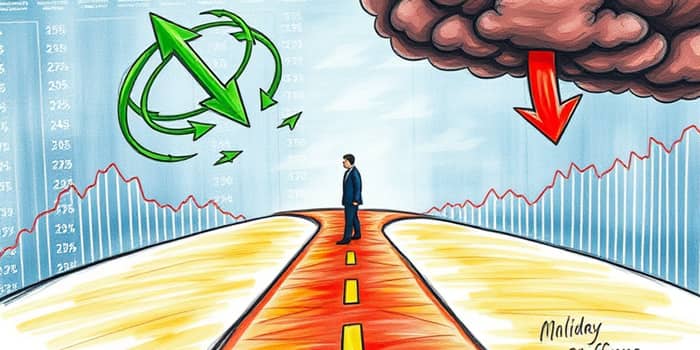
Markets are shaped as much by human emotion as by financial fundamentals. Every investor, novice or expert, experiences a battle between fear and greed, often leading to irrational trading decisions that hurt returns. Recognizing these forces is the first step toward building disciplined strategies that keep you focused on long-term success rather than short-term thrills.
In this article, we explore the predictable emotional cycles that sweep through trading, the common biases that distort your judgement, scientific insights on how emotions drive market moves, and evidence-based strategies to overcome emotional trading. By embracing a rational mindset and proven techniques, you can transform volatile feelings into clear decision-making power.
The Emotional Cycle of Trading
Every market rally and sell-off triggers a sequence of emotions that can cloud rational thought. Based on the 14-stage Option Alpha model, you will often experience the first five stages as follows:
- Optimism: A hunch drives your first buy, believing you have discovered the next big opportunity.
- Excitement: Early gains fuel anticipation, and you feel validated in your choice.
- Thrill: Confidence peaks as profits accumulate; you think you have mastered the market.
- Euphoria: Risk seems invisible; you ignore warnings and chase larger positions.
- Anxiety: Gains start to vanish, but you cling to hope of a long-term uptrend.
Following anxiety, most traders cycle through denial, fear, desperation, panic, and capitulation until the market finally stabilizes. This full emotional arc explains why many buy at highs and sell at lows, reinforcing the adage that emotional investing is usually bad investing. Awareness of these phases empowers you to remain vigilant when emotions surge.
Understanding Behavioral Biases
Beyond the emotional cycle, investors face a range of cognitive and emotional biases that warp perception and lead to performance drag. The table below highlights the most destructive biases with real-world impacts:
Each of these biases, from hindsight bias to novelty bias, chips away at returns by prompting poor timing, insufficient diversification, and excessive trading costs. Recognizing their presence in your own behavior is key to mitigating their effects.
Scientific Insights into Trader Emotions
Academic research confirms that emotions are central to market volatility. Studies on anticipatory emotions in trading show that context-dependent feelings can both aid and hinder performance, depending on the pattern recognition skills of the trader.
The Better-Than-Average Effect, verified by the APA in 2020, explains why a majority of traders believe they outperform peers, driving them into riskier bets. Unconscious emotions, operating below the level of conscious thought, influence decisions even before analysis begins.
Understanding these findings helps you design training and review processes that strengthen mental discipline. By acknowledging the dual role of emotions—both constructive and destructive—you can leverage the positive aspects while guarding against the pitfalls.
Strategies to Overcome Emotional Trading
Transforming emotional impulses into disciplined actions requires deliberate preparation and regular self-assessment. Implement these actionable steps to keep feelings in check and focus on long-term objectives:
- Develop a trading plan with predetermined entry and exit rules and stick to it during volatility.
- Set predetermined risk limits for each trade, using stop orders or position-size caps.
- Perform a pre-mortem analysis, imagining long-term failure scenarios to counter overconfidence.
- Diversify and review portfolios systematically to reduce FOMO-driven shifts.
- Allocate a separate experimental fund for high-risk hunches, keeping core assets protected.
- Seek scientific, data-driven input from advisors who provide objective market assessments.
- Conduct regular performance reviews based on current value and historical data, not price paid.
- Adopt a mindset shift towards rational trading, acknowledging emotions but not yielding to them.
By institutionalizing these practices, you insulate your portfolio from knee-jerk reactions and capitalize on opportunities with confidence rather than compulsion.
Conclusion: Discipline Over Emotion
Investor psychology can be a powerful ally when understood and managed effectively. Emotions will never disappear from markets, but they need not derail your long-term goals. Through self-awareness, evidence-based strategies, and a commitment to predetermined risk limits and rules, you can trade with clarity, resilience, and discipline.
Embrace the journey of mastering your mind as much as the markets. With every plan adhered to and every bias identified, you move closer to achieving consistent, sustainable returns. Remember that true investing success lies not in eliminating emotions, but in harnessing them to inform and not dictate your decisions.
References
- https://optionalpha.com/blog/the-14-stages-of-investor-emotions-and-trading-psychology
- https://online.mason.wm.edu/blog/behavioral-biases-that-can-impact-investing-decisions
- https://www.oanda.com/us-en/trade-tap-blog/trading-knowledge/trading-psychology-understanding-your-emotions/
- https://www.firmfoundationfw.com/blog/common-investor-biases-and-how-they-can-impact-your-finances
- https://pmc.ncbi.nlm.nih.gov/articles/PMC8696076/
- https://www.opus111group.com/blog/9-cognitive-and-emotional-biases-that-can-undermine-your-portfolio-and-how
- https://www.thrivent.com/insights/investing/mastering-market-psychology-how-emotions-impact-investment-decisions
- https://www.schwab.com/learn/story/emotional-biases-and-money
- https://www.etoro.com/investing/psychology-of-investing/
- https://www.ubs.com/us/en/wealth-management/our-solutions/planning/wealth-planning/articles/behavioral-biases-impact-investment-decisions.html
- https://www.youtube.com/watch?v=nRLjxw8rUjQ
- https://www.madisonoakswp.com/top-5-biases-that-impact-investment-decisions
- https://in.snhu.edu/blogs/understanding-psychology-of-financial-markets