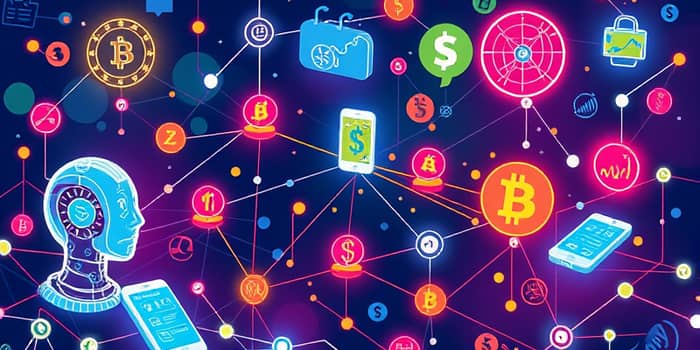
Financial technology is undergoing a profound transformation. As we approach 2026, the sector stands at the cusp of unprecedented change, driven by rapid advances in core technologies and evolving customer expectations.
Evolution of Fintech to 2026
In the past decade, fintech has matured from niche startups into a global powerhouse. According to industry forecasts, fintech revenues will surpass $1.5 trillion by the end of this decade, reflecting explosive growth catalyzed by the pandemic and digital adoption.
Consumers and businesses alike now demand seamless, efficient, and personalized financial services. This shift has spurred innovation across every corner of the industry, redefining how money is managed, moved, and safeguarded.
Core Technologies Powering Innovation
At the heart of this revolution are foundational technologies that interlock to deliver new capabilities.
Artificial intelligence and machine learning form the backbone of many next-generation solutions. From hyper-personalized recommendations to back-office automation, AI/ML tools are streamlining operations and predicting market fluctuations with remarkable accuracy.
Blockchain and distributed ledger technology have moved far beyond cryptocurrencies. Today, enterprises pilot tokenized real-world assets to unlock liquidity in illiquid markets, while smart contracts automate supply chain and real estate transactions without intermediaries.
Open banking, powered by robust APIs, is weaving financial services into everyday platforms. Embedded finance integrations now enable retailers, e-commerce sites, and software providers to offer loans, payments, and insurance directly within their user interfaces.
Market Impacts and Benefits
These technologies translate into tangible advantages for organizations and consumers. By leveraging AI, firms can achieve significant cost savings and pass lower fees to end users.
Real-time payments and settlement rails, orchestrated by intelligent agents, enable instant cross-border transfers and just-in-time funding for treasury operations. Meanwhile, digital identity solutions and biometrics are raising the bar on security and user convenience.
- Cost Reduction: Cloud-native infrastructure cuts overhead and drives operational efficiency.
- New Products: Robo-advisors, P2P lending platforms, and niche investment options expand choice.
- Enhanced Engagement: Personalized dashboards and AI-driven insights foster customer loyalty.
- Sustainable Finance: ESG analytics and tokenized green bonds support responsible investing.
Real-World Examples and Case Studies
Leading institutions are already showcasing the power of these innovations. State Street and Itaú have piloted tokenization platforms to trade real-world assets on blockchain networks, achieving measurable gains in liquidity and transparency.
Major banks deploy AI co-pilots for contract drafting, customer support, and risk management, aiming to embed agentic AI co-pilots in 80% of their enterprise applications by 2026. Embedded finance partnerships between fintech firms and retailers are delivering point-of-sale lending and flexible payment options to millions of shoppers.
Regulations, Risks, and Future Outlook
Regulatory bodies are racing to keep pace. 2026 will see robust frameworks for AI, digital assets, stablecoins, and data privacy. Stronger oversight aims to mitigate bias, prevent cyber threats, and ensure market stability.
Nevertheless, rapid innovation carries inherent risks. Cybersecurity must evolve faster than threat actors, and governance models need to maintain human oversight over algorithmic decisions. Central banks are exploring digital currencies and real-time settlement systems to balance innovation with financial stability.
Actionable Recommendations for Business Leaders
To harness these trends, organizations should adopt a structured approach:
- Assess Technology Readiness: Conduct audits of existing infrastructure and identify gaps in cloud, API, and data capabilities.
- Pilot with Purpose: Launch small-scale projects in AI, blockchain, or embedded finance to validate business cases and manage risk.
- Invest in Talent: Build cross-disciplinary teams with expertise in data science, cybersecurity, and regulatory compliance.
- Partner Strategically: Collaborate with fintech startups, technology vendors, and academic institutions to accelerate innovation.
- Govern Responsibly: Establish clear oversight frameworks for AI ethics, data privacy, and cybersecurity protocols.
Conclusion
As we near 2026, fintech stands poised to reshape the financial landscape through a potent blend of AI/ML, blockchain, open banking, and more. Organizations that embrace these embedded finance ecosystems and invest in secure, scalable architectures will unlock new revenue streams and foster deeper customer engagement.
The future of financial services is digital-first, inclusive, and driven by real-time intelligence. By taking deliberate steps today to pilot innovations, govern risks, and build agile infrastructures, business leaders can ensure they are not just observers of change but its architects.
Fintech’s next chapter promises to empower individuals and enterprises alike with unprecedented control over their financial destinies, paving the way for a more accessible, efficient, and resilient global economy.
References
- https://stripe.com/resources/more/fintech-innovation-where-financial-technology-is-today-and-where-its-heading
- https://www.trinetix.com/insights/fintech-trends
- https://execed.business.columbia.edu/article/disrupting-the-finance-world-how-fintech-is-changing-the-game-for-businesses
- https://m2pfintech.com/blog/10-banking-and-fintech-trends-that-will-redefine-2026-and-beyond/
- https://legal.thomsonreuters.com/blog/the-future-of-fintech-will-deliver-new-benefits-and-new-disruptions/
- https://kpmg.com/xx/en/what-we-do/industries/financial-services/pulse-of-fintech/top-fintech-trends.html
- https://business.ucdenver.edu/2025/06/09/fintechs-ongoing-revolution-redefining-future-financial-services
- https://www.jpmorgan.com/insights/technology/fintech-outlook-trends-and-the-future-of-fintech-startups
- https://www.worldbank.org/en/publication/fintech-and-the-future-of-finance
- https://www.bdo.com/insights/industries/fintech/2026-fintech-industry-predictions
- https://www.bis.org/topic/fintech.htm
- https://www.cbinsights.com/research/report/fintech-predictions-2026/
- https://guides.loc.gov/fintech/21st-century/financial-services-disruption
- https://www.money2020.com/content/predictions
- https://plaid.com/resources/fintech/fintech-trends/