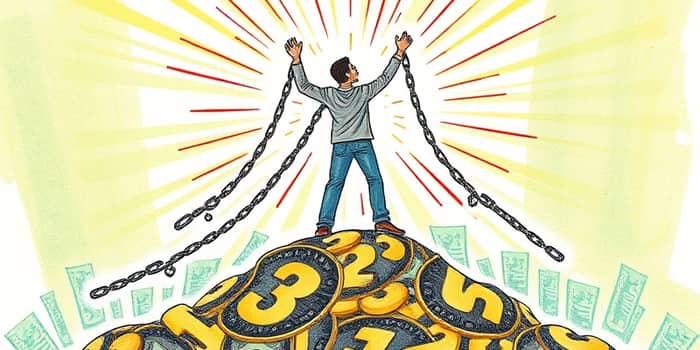
Feeling overwhelmed by mounting balances and interest charges? This guide offers a clear path to
take back control of your money and your life.
Understanding Your Debt Situation
Before embarking on a debt recovery journey, it’s essential to gain a complete picture of your obligations. Begin by gathering detailed balances for every loan, credit card, and line of credit you hold. Record the interest rates, minimum monthly payments, and due dates in a simple spreadsheet or notebook.
Next, create a realistic monthly budget. Track income streams alongside fixed and variable expenses over two to three months. This exercise will unveil potential areas to trim spending and identify extra cash for accelerated paydown. Finally, establish a modest emergency fund—three months of living costs—to prevent new borrowing when unexpected bills arise.
Step 1: Building Your Financial Foundation
Stopping the cycle of new debt is critical. Adopt these DIY measures from consumer-protection experts to shore up your financial base:
- Compile paycheck stubs, bills, and statements; analyze spending categories.
- Set concrete goals: target payoffs, savings milestones, and scheduling reviews.
- Contact creditors at the first sign of missed payments; negotiate alternative due dates or hardship plans.
- Automate transfers to your emergency fund each payday, even if it’s a small amount.
By consistently applying these steps, you will build momentum and confidence. Remember, every dollar you reroute from unnecessary fees toward principal accelerates your journey.
Step 2: Choosing a Repayment Strategy
Not all repayment approaches suit every situation. Review these four proven methods and select the one that aligns with your personality and goals.
- Debt Snowball Method: Pay smallest balances first to generate quick wins and motivation.
- Debt Avalanche Method: Attack highest interest rates to minimize total interest paid.
- Extra-Payment Approach: Add any available surplus—$20 or $200—to your targeted account monthly.
- Debt Consolidation: Merge multiple balances into one lower-rate loan for a simplified repayment schedule.
Some may also consider debt settlement or professional counseling if traditional methods prove challenging. Always verify fees and risks before enrolling in any third-party program.
Step 3: Implementing and Tracking Progress
With your selected strategy in hand, commit to regular monitoring. Establish a weekly check-in to update your ledger, mark paid accounts, and note the shrinking totals. Use visual aids such as charts or thermometer graphics to celebrate milestones.
If you fall behind, reach out to creditors immediately. Many offer hardship programs that temporarily lower interest rates or defer payments. Maintaining open communication protects your credit score and prevents accounts from entering collections.
For sustained success, cultivate habits of saving and frugality. Channel windfalls—tax refunds, bonuses, or gifts—toward debt reduction. Reinvest savings realized from paying off loans into your emergency cushion or retirement fund.
Why Financial Freedom Matters
According to a 2025 survey, 77 percent of Americans feel their finances are not fully secure, up from 75 percent in 2024. More than half report earnings fall short of perceived needs, and only 12 percent of those making under $50K feel truly safe. Becoming debt-free is not just a milestone; it’s a transformative life event that reshapes your mental and emotional well-being.
In another study, 54.2 percent of respondents across generations defined freedom as living without debt. Yet 58 percent felt far from this ideal. By following a structured plan and leveraging proven methods, you join the 52 percent whose journeys are improving—turning hope into measurable progress.
Global Perspective and Broader Vision
Worldwide, economic freedom scores average just 48 out of 100. Top-ranking nations enjoy policies and cultures supportive of individual enterprise, while the world’s most constrained regions score near zero. Although personal debt challenges differ by country, the universal aspiration remains the same: the ability to control one’s destiny.
Imagine a life where every paycheck is an investment in your dreams rather than interest payments on yesterday’s choices. Envision using your hard-earned money to travel, support causes, and build lasting security for your family.
Conclusion: Embrace Your Debt Detox Journey
Reclaiming your financial freedom requires action, patience, and resilience. By implementing these foundational steps—tracking expenses, choosing the right repayment method, and celebrating small wins—you lay the groundwork for a clear path to financial independence.
Your journey will have ups and downs, but each payment brings you closer to a life unburdened by debt. Start today: assemble your data, pick a method, and commit to consistent progress. Freedom awaits.
References
- https://dfpi.ca.gov/news/insights/three-steps-to-managing-and-getting-out-of-debt/
- https://www.bankrate.com/investing/financial-advisors/financial-freedom-survey/
- https://www.westernsouthern.com/personal-finance/debt-reduction-strategies
- https://www.prnewswire.com/news-releases/only-1-in-10-americans-are-living-their-definition-of-financial-freedom-achieve-survey-finds-301906121.html
- https://www.navyfederal.org/makingcents/credit-debt/debt-repayment-strategies.html
- https://www.theglobaleconomy.com/rankings/herit_financial_freedom/
- https://www.nerdwallet.com/personal-loans/learn/pay-off-debt
- https://www.federalreserve.gov/publications/2025-economic-well-being-of-us-households-in-2024-overall-financial-well-being.htm
- https://www.equifax.com/personal/education/debt-management/articles/-/learn/paying-off-debt-strategies/
- https://economicfreedom.heritage.org
- https://consumer.ftc.gov/articles/how-get-out-debt
- https://www.publicpolicy.cornell.edu/cgd/research/financial-freedom-index/
- https://www.yolofcu.org/resources/debt-pay-off-strategies
- https://www.pewresearch.org/social-trends/2024/01/25/financial-help-and-independence-in-young-adulthood/
- https://www.friendshipstatebank.com/debt-detox-part-1