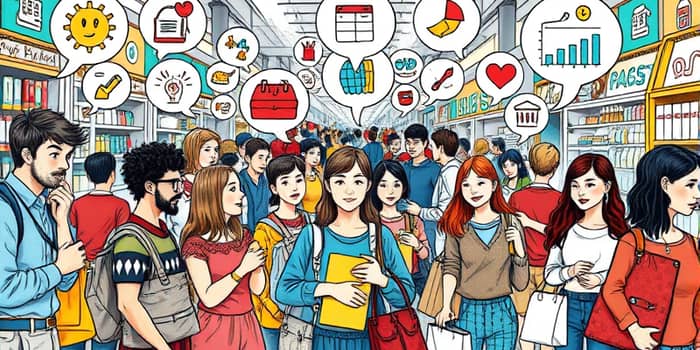
In today’s marketplace, every purchase tells a deeper story. Beneath the surface of price tags and product claims lie complex psychological forces that guide our decisions. By unraveling these hidden mechanisms, we gain clarity on why we choose one brand over another, how emotions can trump logic, and what compels us to return for more.
Whether you are a marketer seeking to inspire loyalty or a conscious shopper aiming for mindful consumption, understanding the layers of consumer behavior can transform your approach to buying and selling alike.
Factors Influencing Buying Decisions
Consumer choices emerge from the dynamic interplay of multiple influences. These factors can be grouped into clear categories that shape every aspect of the decision-making process.
- Psychological Factors: Internal perceptions, motivations, attitudes, and emotions form the lens through which products and messages are evaluated.
- Personal Factors: Demographic traits, lifestyle preferences, and personality quirks determine individual tastes and purchase priorities.
- Social Factors: Family traditions, peer opinions, and digital communities reinforce norms and create shared expectations.
- Cultural Factors: Collective values, societal roles, and subculture identities influence the symbolic meaning attached to products.
- Economic Factors: Budget constraints, perceived value, and access to credit set the financial boundaries of choice.
- Situational/Marketing Factors: Contextual elements like product availability, promotional offers, and environmental cues drive immediate buying behavior.
At the heart of these drivers lie internal drivers like perception and memory, upcoming brand encounters are filtered through past experiences, reviews, and emotional associations.
Brands often tap into Maslow’s hierarchy of human needs to align offerings with core desires. For example, safety features speak to security needs, while luxury products cater to esteem and self-actualization goals. Understanding these nuances allows marketers to tailor messages that resonate on an intrinsic level.
Personal factors such as age, income level, and lifestyle stage further personalize how consumers weigh options. A young professional might prioritize innovation and status, while a parent may lean toward durability and cost-effectiveness. Recognizing these patterns empowers companies to segment audiences with precision.
Meanwhile, social proof and cultural norms nudge individuals toward choices that reflect group values. A recommendation from a trusted friend, celebrity endorsement, or trending social media challenge can tip the scales in unexpected ways. Coupled with favorable economic conditions, such viral influences can create surges in demand.
Cognitive Biases and Heuristics
No matter how rational we believe ourselves to be, our minds are wired with shortcuts that simplify complex choices. These mental heuristics can lead to systematic biases that marketers skillfully leverage.
- Anchoring: Relying heavily on the first piece of information encountered to make judgments.
- Scarcity Heuristic: Perceiving limited items as more valuable and desirable.
- Choice Paralysis: Experiencing overwhelm when faced with too many alternatives.
- Emotional Biases: Letting moods and affective states influence perceptions of value and risk.
Consumers often fall prey to emotional undercurrents that override rational analysis when excitement or fear sets in during a sale. Retailers exploit this by flashing countdown timers or limited-stock alerts, creating a sense of urgency.
Following a dramatic price drop, shoppers may anchor on the discounted rate and perceive any higher future price as expensive, even if it remains within a typical range. Such tactics emphasize how the anchoring effect on price perception can distort true product value.
Similarly, scarcity heuristic in limited-time promotions heightens desirability, while an overabundance of choices can immobilize decisions. Streamlining offerings and guiding customers toward curated selections helps mitigate these pitfalls and enhances conversion rates.
Types of Buying Behaviors
Consumers exhibit distinct purchasing patterns that reflect their level of involvement, risk assessment, and habitual tendencies. Recognizing these types allows brands to craft appropriate engagement strategies.
Marketers can tailor their approach: subscription models and loyalty points nurture habitual engagement, while in-depth guides and comparison tools support complex buyers. Sampling campaigns satisfy variety-seekers, and robust return policies address buyers experiencing cognitive dissonance causing post-purchase regrets.
Consumer Journey and Post-Purchase Effects
The consumer journey unfolds across five pivotal stages, each presenting unique touchpoints and emotional landscapes:
- Awareness: First encounter through advertising, social media, or word of mouth.
- Interest: Active information seeking, website visits, and peer consultations.
- Desire: Emotional resonance as buyers envision personal benefits.
- Action: Final decision influenced by convenience, pricing, and promotions.
- Post-Purchase: Satisfaction or regret shapes future loyalty and word-of-mouth activity.
Brands succeed by delivering consistent messaging and support at each stage. For instance, follow-up emails sharing tips and community testimonials at the post-purchase phase reduce returns and foster advocacy.
By fostering ongoing engagement to reinforce brand loyalty, companies transform one-time customers into long-term champions, fueling organic growth and repeat revenue.
Insights and Strategies for Marketers
Armed with a deep understanding of consumer psychology, brands can engineer experiences that resonate on both conscious and subconscious levels. This begins by tapping into the unconscious reptilian brain drives core impulses, addressing primal desires for safety, social belonging, and esteem.
Color palettes, typography, and imagery should evoke specific emotional responses—blue for trust, red for excitement, green for sustainability. Combined with compelling narratives, these visual cues can create powerful brand associations.
Limiting the number of options to a manageable handful and spotlighting bestseller tags prevents choice overload. Incorporating social proof—star ratings, testimonials, influencer endorsements—validates decisions and amplifies credibility.
Successful campaigns align marketing messages with core values, demonstrating authenticity through initiatives that reflect customer priorities, such as eco-friendly packaging or community engagement programs.
Finally, adopting a holistic approach harnessing consumer psychology insights ensures that each touchpoint, from pre-purchase research guides to personalized loyalty rewards, works in harmony to build trust, reduce friction, and cultivate lasting relationships.
Conclusion
Consumer behavior is more than transactions; it is a tapestry woven from emotions, cognitive shortcuts, and social influences. Recognizing these hidden drivers empowers brands to create meaningful experiences forging lasting customer connections while enabling individuals to become more aware and intentional in their purchasing choices.
Whether you are refining a marketing strategy or evaluating your next purchase, embracing the psychology of buying illuminates the path to decisions that satisfy both practical needs and deeper aspirations. In this ever-evolving landscape, empathy, insight, and creativity remain the keys to meaningful engagement and sustainable growth.
References
- https://swifterm.com/the-psychology-of-purchasing-decisions/
- https://online.longwood.edu/business/mba/marketing/how-consumer-decisions-are-researched/
- https://www.keiseruniversity.edu/articles/consumer-behavior-understanding-market/
- https://www.productmarketingalliance.com/what-influences-customer-behavior/
- https://brandmasteracademy.com/consumer-behavior/
- https://courses.lumenlearning.com/wmintrobusiness/chapter/reading-influences-on-consumer-decisions/
- https://www.rasmussen.edu/degrees/business/blog/5-factors-that-influence-consumer-behavior/
- https://www.edgecrm.app/articles/factors-influencing-consumer-decision
- https://imarticus.org/blog/consumer-behavior/
- https://pimberly.com/blog/factors-influence-consumer-purchasing-decisions/
- https://www.loopreturns.com/blog/4-types-consumer-purchasing-behavior/
- https://www.businessnewsdaily.com/10151-how-to-influence-consumer-decisions.html
- https://www.apa.org/monitor/2021/06/feature-consumer-behavior
- https://biz.libretexts.org/Courses/Sacramento_City_College/ENTR_356:_Bootstrap_Marketing_for_Entrepreneurs/03:_Chapter_3/3.04:_Factors_Influencing_Consumer_Decisions
- https://www.clootrack.com/knowledge/customer-behavior-analytics/types-of-consumer-behavior