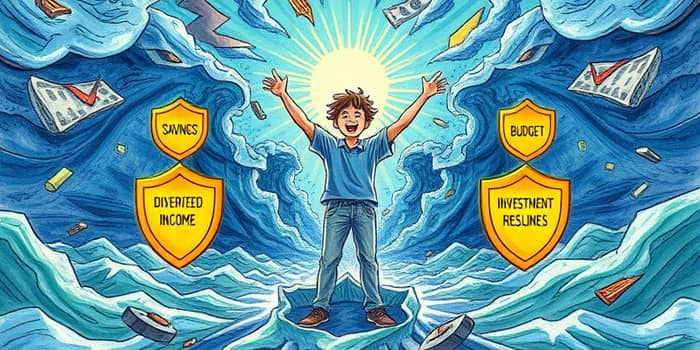
In an unpredictable economic climate, having a plan is no longer optional—it's essential. Recessions can strike suddenly, disrupting income and eroding savings. By understanding the mechanics, warning signs, and impacts of downturns, you can build an effective financial immune system to weather any storm.
Understanding Recessions and Their Mechanics
A recession is defined as a significant decline in economic activity that extends across the economy for more than a few months. A practical shorthand is two consecutive quarters of decline in real GDP, the inflation-adjusted measure of a nation’s output.
Typically lasting about a year, though sometimes shorter or much longer, recessions are driven by factors such as sudden economic shocks, excessive debt defaults, rapid technological shifts, or sharp swings in commodity prices. When unemployment rises, industrial production falls, and consumer spending contracts, the economy enters a contraction phase.
Identifying Early Warning Signs
By watching key indicators, you can prepare before a full downturn arrives. Keep an eye on:
- Rising unemployment rate as companies trim staff.
- Declining personal income excluding government support.
- Reduced consumer spending reflected in weaker retail sales.
- Falling industrial production in manufacturing and output.
- Inverted yield curve signaling investor pessimism.
- Bear stock markets with sustained declines and volatility.
Early preparation allows you to shore up resources and adjust spending before conditions worsen.
Personal and Financial Impacts of Downturns
Recessions can trigger job losses, reduced hours, and shrinking variable pay such as bonuses or commissions. Credit standards tighten, raising the risk of debt defaults, while asset prices—from stocks to real estate—often fall sharply. Interest-rate shocks may bring higher borrowing costs or inflation that erodes purchasing power, leading to heightened financial stress and emotionally driven decisions.
To counter these threats, building a resilient financial foundation—your “immune system”—is crucial.
The Four Pillars of Financial Immunity
Your strategy should focus on four core components: adequate liquid savings, manageable high-interest debt, diversified and stable income, and a disciplined, long-term investment plan. Each pillar reinforces the others to create a robust defense.
1. Building Adequate Liquid Savings
An emergency fund provides the first line of defense. Financial experts converge on a recommendation of three to six months of essential expenses stored in a liquid, low-risk account. If you are the sole earner or work in a cyclical industry, consider extending that buffer to at least six months.
Where to keep your funds:
- High-yield savings account or interest-bearing checking
- Money market savings or short-term money market fund
- Short-term CDs or U.S. Treasuries within FDIC limits
In recessions, cash is king. Having readily accessible cash prevents you from selling investments at market lows or relying on high-interest credit during emergencies.
2. Creating a Defensive Budget
A “bare-bones” budget identifies the minimum spending required to cover shelter, utilities, food, transportation, insurance, and debt obligations. Follow these steps:
- List all income sources: primary job, side hustles, partner’s contributions.
- Detail every monthly expense, including annualized costs like insurance premiums.
- Prioritize essential items and determine the lowest monthly survival budget.
Once identified, trim non-essential spending—dining out, subscriptions, luxury purchases—and direct savings into your cash buffer or debt reduction.
3. Managing High-Interest Debt
Debt weighs heavily during economic uncertainty. Focus on paying down high-interest obligations first, especially credit card balances. Reducing these burdens frees up income and lowers financial vulnerability.
Speak with lenders about hardship programs or modified payment plans if income drops. Prioritizing debt payments preserves your credit and maintains financial flexibility.
4. Diversifying Income and Investments
Relying on a single income source or investment can be risky. Seek additional revenue streams such as freelancing, consulting, or passive income from rental properties or dividend-paying stocks. A stable and diversified income base cushions against job loss.
On the investment side, maintain a long-term strategy aligned with your risk tolerance and time horizon. Diversify across asset classes—stocks, bonds, real estate, and alternative investments—to reduce portfolio volatility.
Most importantly, practice emotional discipline. Resist panic selling during market declines; downturns are cyclical, and staying invested often yields better long-term outcomes.
Bringing It All Together: Your Path to Resilience
Building financial immunity requires consistent effort and regular review. Set milestone goals:
- Save three to six months of expenses in a liquid account
- Establish a bare-bones budget and trim discretionary costs
- Pay down high-interest debt to free up cash flow
- Develop multiple income streams and diversify investments
By focusing on these pillars, you create a protective shield that not only helps you survive recessions but positions you to thrive when recovery arrives.
Financial immunity is more than a temporary tactic; it’s a lifelong habit. Start building today, and face economic uncertainties with confidence and calm.
References
- https://www.oldnational.com/resources/insights/5-ways-to-protect-your-money-from-a-recession/
- https://rjofutures.rjobrien.com/rjo-university/protecting-investments-during-recessions
- https://www.washingtontech.edu/protecting-yourself-from-a-recession/
- https://www.fidelity.com/learning-center/personal-finance/how-to-prepare-for-a-recession
- https://www.morganstanley.com/articles/managing-finances-during-recession
- https://www.whittiertrust.com/four-strategies-for-wealth-preservation/
- https://www.schwab.com/learn/story/5-tips-weathering-recession
- https://www.equifax.com/personal/education/personal-finance/articles/-/learn/five-ways-to-prepare-for-a-recession/
- https://endowus.com/insights/financial-resilience-against-recessions
- https://www.nerdwallet.com/investing/learn/what-to-invest-in-during-recession
- https://www.youtube.com/watch?v=GTamrPvlV4c
- https://www.income.com.sg/blog/protect-your-finances