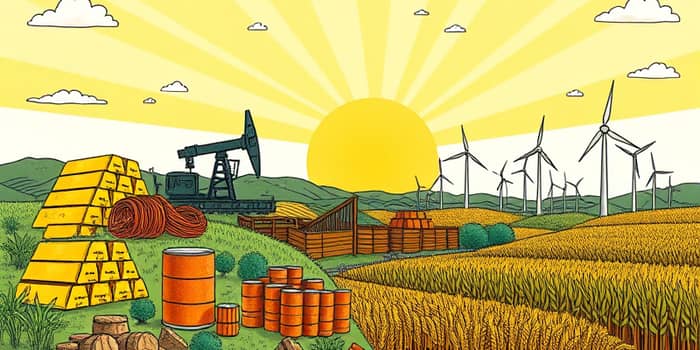
As global markets shift and investors seek new sources of stability and growth, commodities are taking center stage in 2026. After a prolonged bear market from 2022 to 2024, we stand at the threshold of a new cyclical bull market in commodities. Far from being replacements for equities or fixed income, real assets like metals, energy, and agriculture now offer powerful diversification and inflation protection.
The Dawn of a New Commodity Supercycle
History teaches that commodity markets move in multi-year cycles driven by supply, demand, geopolitics, and technological change. Following underinvestment in the 2010s and a downturn in 2022–2024, structural drivers such as the energy transition, geopolitical tensions, and tightening supply chains have triggered a fresh uptrend.
Gold led the charge, rallying through 2025 as central banks increased holdings and investors sought safe havens. Now base metals like copper and aluminum are catching up, propelled by global electrification and infrastructure spending. With the Fed poised for rate cuts and resilient GDP growth, the macro backdrop is exceptionally supportive of commodity returns.
Why Commodities Deserve a Spot in Portfolios
Traditional portfolios anchored in stocks and bonds can struggle during bouts of volatility and inflation. Commodities, as real assets, offer unique benefits that complement financial assets rather than compete with them.
- Low correlation to traditional stocks and bonds, reducing overall portfolio swings.
- Historically strong inflation hedge, preserving purchasing power as input costs rise.
- Real-asset resilience in volatile markets, often rallying when financial assets falter.
- Exposure to secular trends like energy transition and supply-demand imbalances.
A diversified basket of commodities returned +13.5% during periods when both stocks and bonds declined—a testament to their role as an effective ballast and growth driver.
Forecasts and Trends Shaping 2026
Market forecasts point to a broad rally across sectors:
• Gold is expected to test $5,000 per ounce by spring, holding above $4,800 into year-end. Base metals such as copper may trade near $11,000 per tonne as shortages deepen. Oil prices, after an oversupplied first half, should recover in H2 on constrained non–OPEC+ output. Natural gas volatility presents trading opportunities.
Meanwhile, agriculture and fertilizer markets—wheat, corn, soybeans, nitrogen—are reacting to evolving supply chains and climatic factors. Uranium and energy transition metals benefit from unprecedented capex in renewables, clean technologies, and grid infrastructure.
Practical Strategies for Commodity Investing
Allocations of 5–10% to commodities can enhance portfolio resilience without overshadowing core equity and bond holdings. Investors can choose among a range of vehicles tailored to risk tolerance, liquidity needs, and thematic focus.
Navigating Risks and Best Practices
While the opportunity set is vast, commodities carry unique risks: sharp price swings, operational complexities, tax considerations such as K-1 forms, and margin requirements in futures trading. To manage these, investors should:
- Maintain disciplined position sizing and regular rebalancing.
- Diversify across both broad baskets and select themes.
- Use derivatives judiciously to hedge significant exposures.
- Stay informed on supply-demand data, geopolitical news, and technical indicators.
By combining fundamental research with risk controls, investors can capture upside while mitigating drawdowns.
Conclusion: Embracing Real Assets for Resilient Portfolios
As the commodity supercycle unfolds, a modest allocation of 5–10% to real assets can transform traditional portfolios. Broad commodities exposure for portfolio resilience not only provides an inflation hedge but also taps structural themes like the energy transition and global infrastructure renewal. Investors who position now stand to benefit from unprecedented capital expenditure in energy transition and ongoing supply constraints.
In a world of low bond yields and stretched equity valuations, commodities offer a compelling alternative—one grounded in physical scarcity, geopolitical dynamics, and long-term secular trends. Step beyond stocks and bonds to build a truly diversified, future-proof investment strategy that stands strong in the cycles to come.
References
- https://www.investing.com/analysis/10-charts-point-to-commodities-becoming-a-major-macro-theme-in-2026-200672589
- https://theprudentspeculator.com/blog/special-reports/the-comprehensive-guide-to-alternative-investments/
- https://www.morganstanley.com/im/de-de/intermediary-investor/insights/outlooks/trends-driving-optimism-in-2026.html
- https://www.ml.com/solutions/alternative-investments.html
- https://online.hbs.edu/blog/post/types-of-alternative-investments
- https://www.ubs.com/us/en/wealth-management/insights/market-news/article.3002623.html
- https://westwoodgroup.com/insight/beyond-traditional-asset-classes-exploring-alternatives/
- https://www.youtube.com/watch?v=rbOuGsYy6Xs
- https://8figures.com/blog/portfolio-allocations/exploring-investment-alternatives-beyond-stocks-and-bonds
- https://www.baringa.com/en/insights/trading-business-of-tomorrow/commodity-market-trends-2026/
- https://www.youtube.com/watch?v=BsHemoL_lUE
- https://www.morganstanley.com/insights/articles/commodities-outlook-2026-resilience-through-market-volatility
- https://www.morganstanley.com/ideas/alternative-investments-portfolio-diversification
- https://home.cib.natixis.com/articles/commodities-markets-exploring-key-themes-for-2026