Capital cities are more than political centers; they are living galleries where creativity, culture, and commerce converge to shape the future. Throughout history, these urban cores have served as hubs for innovation, economic dynamism, and artistic expression. By viewing a capital as a vast canvas, we can trace how strategic investments in the arts and culture ignite local economies and craft pathways to prosperity.
In this article, we explore the powerful synergy between art and economics in capitals worldwide, uncovering case studies, data-driven insights, and practical guidance for community leaders, investors, and citizens seeking to harness cultural capital for lasting impact.
Capitals as Economic Powerhouses
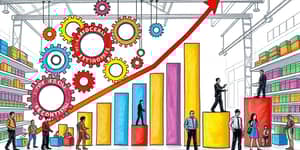
Across developed nations, capital regions often punch above their weight. On average, **capital regions contribute 26% of national GDP**, but extremes abound: Athens accounted for 47.8% of Greek GDP in 2018, while Washington D.C. represented just 0.7% of U.S. GDP that same year.
Australian capitals like Sydney and Melbourne illustrate this concentration of innovation and exports: they host **99% of patent registrations**, and a surge in advanced business services fuels productivity gains. In fact, research shows that doubling ABS density boosts productivity by 15%, while exports in tourism, education, and business inputs total over $90 billion annually.
In North America, the Washington D.C.–Baltimore–Richmond super-region boasts a $697 billion GDP, with the city accounting for two-thirds of $697 billion output. Over a 15-year period, this corridor expanded by 35%, demonstrating how capitals anchored by public institutions and research universities can rival established business hubs.
Arts Markets Driving Local Growth
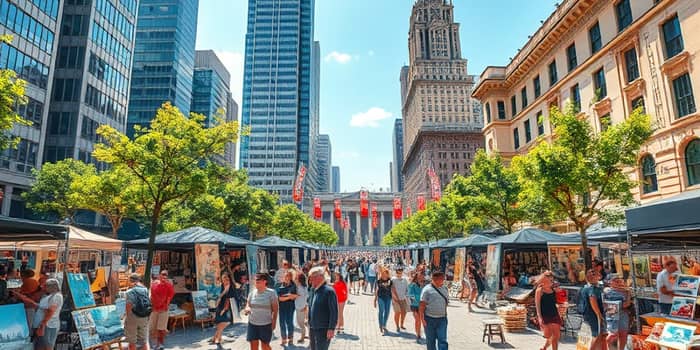
Capitals leverage cultural initiatives to strengthen community ties and stimulate commerce. The Capital Arts Collective at Wilson Plaza, for example, hosts bi-weekly markets featuring local jewelry, paintings, candles, and artisanal foods. These markets partner with Capital Harvest on the Plaza to combine fresh produce with crafts, fostering sustainability while attracting thousands of visitors each season.
Similarly, the Capital Prize in Richmond, Virginia—launched by VCUarts and Capital Square—offers a $5,000 pooled prize for alumni artists exhibiting at Chasen Gallery. This juried exhibition not only uplifts emerging talent but also transforms Scott’s Addition into a creative corridor, inviting residents and investors to participate in cultural renewal.
- Regular markets increase foot traffic by up to 30%
- Exhibitions connect artists with collectors and galleries
- Collaborations with local businesses drive spillover sales
By supporting these initiatives, capitals cultivate a vibrant street-level economy that complements high-level finance and government services. Small businesses thrive, job opportunities multiply, and neighborhoods gain a renewed sense of pride.
Art as an Investment Asset Class
Beyond community impact, art has emerged as a compelling financial asset. Over the 1995–2021 period, contemporary art achieved 14% annual returns, outperforming the S&P 500’s 9% compound growth. This growth is underpinned by the scarcity of rare works and a resilient base of high-net-worth buyers.
Art funds, structured much like private equity vehicles, pool capital to acquire works at auction and on the secondary market. These funds offer investors exposure to cultural assets while leveraging professional curation and market analysis. In downturns such as the Great Recession, art often holds value, making it an invaluable portfolio diversifier.
On the commercial front, enterprises like Capital Canvas have sold over 15 million printed reproductions of iconic artworks, demonstrating how mass-market approaches can bridge fine art with broader consumer demand.
Challenges and Opportunities
While dominant capitals enjoy robust growth, secondary capitals face hurdles. Cities like Berlin and Canberra must balance political functions with creative economies to narrow productivity gaps. Public procurement strategies—outsourcing to local firms—can stimulate innovation and sustain civic budgets.
Emerging tech hubs, from Ottawa to The Hague, showcase how targeted investments in entrepreneurship and research partnerships can diversify the economic base. St. Petersburg, Florida, recorded a 98% jump in business applications and a 43% GDP growth following cultural-led revitalization efforts, proving that even smaller capitals can compete on the global stage.
Future Outlook: Cultivating Sustainable Growth
Looking ahead, capitals must foster multi-dimensional growth strategies. Policymakers and private stakeholders can focus on:
- Integrating technology districts with cultural venues
- Expanding affordable studio and co-working spaces
- Developing art-based public procurement programs
By embracing a holistic vision—where public infrastructure, creative communities, and investment capital intersect—capitals will continue to paint new avenues of prosperity.
Conclusion
From the bustling plazas of Athens to the bustling galleries of Richmond, the synergy of art, culture, and economic policy transforms capitals into dynamic canvases of opportunity. Whether through markets that enliven street life or art funds that redefine investment, these initiatives empower citizens and attract global attention.
As urban centers evolve, the lesson is clear: nurturing cultural vibrancy is not a luxury—it is a cornerstone of sustainable economic growth. By wielding creativity as both inspiration and asset, capitals worldwide can craft resilient futures where art and opportunity flourish together.
References
- https://rrbitc.com/capital-arts-collective/
- https://www.lordmayors.org/publications-2/the-critical-role-of-our-capital-cities/
- https://arts.vcu.edu/event/capital-prize-inaugural-exhibition-opening-round-one/
- https://www.wilmingtontrust.com/library/article/canvas-and-capital-exploring-art-as-an-investment
- https://www.statista.com/chart/15738/the-contribution-of-selected-capital-cities-to-their-countries-gdp/
- https://www.regionalstudies.org/rsa-blog/the-political-economy-of-capital-cities/
- https://capitalcanvasprints.com
- https://www.coworkingcafe.com/blog/top-cities-for-economic-growth/
- https://www.nlc.org/article/2025/05/01/how-cities-can-spark-economic-transformation-through-entrepreneur-led-economic-development/
- https://www.eurofound.europa.eu/en/publications/all/what-makes-capital-cities-best-places-live
- https://doaj.org/article/1ada22976bbf48b0bf8efbbc1d4f048a