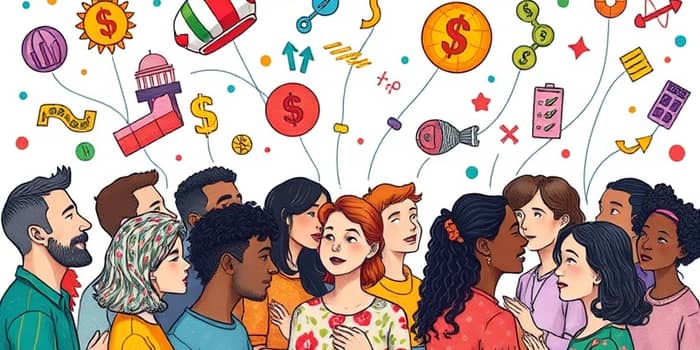
In an age dominated by data and algorithms, the subtle power of human psychology often remains hidden beneath spreadsheets and forecasts. Behavioral economics unveils the intricate ways in which our minds guide financial choices. By illuminating why we sometimes act against our own interests, this field offers a roadmap for businesses, policymakers, and consumers alike.
The Foundations: Where Economics Meets Psychology
Traditional economic theory assumes individuals always make rational choices to maximize their utility. Yet, decades of research have demonstrated that cognitive biases and heuristics often lead us astray. Behavioral economics combines rigorous economic models with insights from psychology to challenge the notion of pure rationality and reveal the true drivers of decision-making.
The core purpose of this discipline is twofold: to predict human behavior more accurately and to design environments that nudge individuals toward better outcomes. By acknowledging emotional influences on decision-making, we can craft more effective public policies, smarter marketing strategies, and greater personal wellbeing.
Key Principles That Shape Our Choices
At the heart of behavioral economics lie a set of principles that explain why seemingly irrational decisions prevail. Below is a concise overview:
These principles pervade marketing, finance, and daily interactions, often without conscious awareness. Recognizing them equips us with the tools to both influence and guard against undue persuasion.
Practical Applications in Marketing Strategies
Marketers leverage behavioral insights to craft campaigns that resonate with our inherent tendencies. By understanding how the mind weighs options, companies can:
- Use pricing endings like “.99” to optimize pricing and promotions and tap into mental accounting biases.
- Create decoy options that steer consumers toward higher-margin products.
- Offer free trials, playing on the sunk cost fallacy to encourage long-term subscriptions.
- Display social endorsements prominently to drive consumer engagement and loyalty.
In e-commerce, recommendation algorithms and abandoned-cart reminders serve as gentle nudges that align with our tendency to procrastinate on purchases, ultimately boosting conversion rates and customer satisfaction.
Harnessing Behavioral Insights in the Workplace
Organizations that integrate behavioral principles into their internal processes often see tangible gains in productivity and morale. Consider these approaches:
- Automatic enrollment in benefit programs leverages the default bias to increase participation.
- Performance dashboards with peer comparisons tap into social proof to encourage healthy competition.
- Targeted feedback and personalized recognition and incentives boost motivation by connecting achievements to emotional rewards.
By implementing subtle nudges toward better outcomes, companies foster environments where employees feel guided rather than coerced, leading to sustained engagement and innovation.
Empowering Consumers: Awareness and Self-Reflection
While businesses employ these tactics to influence behavior, consumers gain by recognizing hidden triggers and making more mindful choices:
- Pause before impulsive purchases to counteract loss aversion and scarcity cues.
- Compare anchor prices across retailers rather than relying on the first figure encountered.
- Track recurring subscriptions regularly to avoid the sunk cost trap.
- Seek diverse opinions and reviews to mitigate herd behavior and social proof biases.
By learning to recognize hidden influences in choices and make more informed financial decisions, individuals reclaim agency over their spending and long-term goals.
Ethical Considerations and the Future of Behavioral Economics
As behavioral techniques gain prominence, the line between persuasion and manipulation can blur. Responsible practitioners must balance persuasion with ethical responsibility, ensuring that nudges respect autonomy and serve the public good.
Looking ahead, advances in data analytics and neuroscience promise even deeper insights into decision processes. Yet the core tenet of behavioral economics remains unchanged: empathetic understanding of human nature leads to better outcomes for all stakeholders.
Conclusion
Behavioral economics unveils the hidden forces shaping our market decisions, bridging the gap between cold numbers and warm human intuition. By embracing these insights, businesses can build lasting competitive advantages, policymakers can design more effective interventions, and consumers can navigate choices with clarity and confidence. Ultimately, acknowledging the human element at the heart of economic activity drives progress, innovation, and wellbeing on a global scale.
References
- https://www.abacademies.org/articles/the-role-of-behavioral-economics-in-business-decisionmaking-insights-for-strategic-growth-17547.html
- https://www.digivate.com/blog/digital-marketing/behavioural-economics-marketing/
- https://insidebe.com/articles/behavioral-economics-in-business-sector/
- https://sites.lsa.umich.edu/mje/2021/05/14/the-origin-of-behavioral-economics-and-its-influence-on-marketers-and-consumers/
- https://www.renascence.io/journal/behavioral-economics-in-decision-making-understanding-how-people-make-choices
- https://www.comparables.ai/articles/behavioral-economics-and-its-influence-on-market-analysis
- https://www.profit.co/blog/behavioral-economics/12-behavioral-economics-secrets-for-all-marketers/
- https://blog.mindforceresearch.com/behavioral-economics-the-hidden-forces-driving-consumer-decisions/
- https://hawkpartners.com/behavioral-economics/behavioral-economics-changing-marketing-know/
- https://pmc.ncbi.nlm.nih.gov/articles/PMC3680155/
- https://news.uchicago.edu/explainer/what-is-behavioral-economics
- https://www.skyword.com/contentstandard/8-marketing-takeaways-from-behavioral-economics/