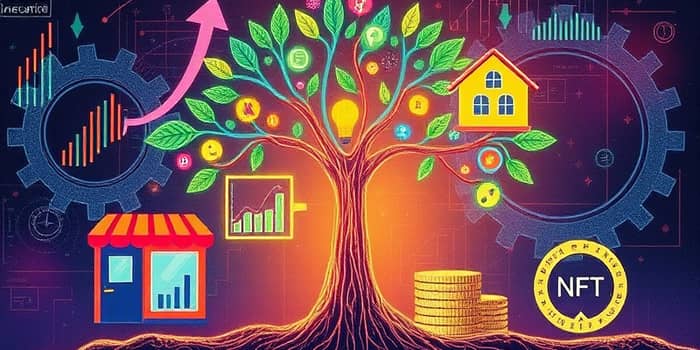
In 2026’s shifting economy, it’s never been more critical to break free from conventional income sources. This guide offers a comprehensive pathway to cultivate resilience, predictability, and growth through strategic diversification.
The Imperative of Diversification
Relying on a single source of income can leave you exposed to market swings, policy changes, and unforeseen disruptions. When inflation persists and traditional investments offer diminishing returns, a diversification-first mindset is essential for both individuals and businesses looking to safeguard their financial future.
By weaving together multiple income threads, you craft a resilient tapestry that absorbs shocks and maintains steady growth. This approach fosters long-term stability and sustainable expansion, empowering you to navigate downturns with confidence and seize new opportunities as they arise.
Common Revenue Streams
Successful income models often rely on a mix of established and emerging channels. The table below highlights key streams with their descriptions and examples.
This diverse palette of streams lays the foundation for a flexible, multi-layered income approach that shields against market unpredictability.
Strategies to Unlock New Streams
Implementing fresh revenue ideas requires an organized framework. Below are three core categories packed with actionable tactics:
Category 1: Product and Service Expansion
- Create new products or services tailored to emerging demands
- Diversify offerings with premium versions and complementary items
- Offer online courses or e-learning modules based on expertise
- Enter international markets through partnerships or digital platforms
- Sublet unused office or warehouse space for passive returns
- Host paid events, workshops, or webinars to monetize knowledge
- Adopt a freemium model to attract users and upsell features
- Implement tiered pricing with low, medium, and high-ticket options
Category 2: Pricing and Sales Optimization
- Use dynamic, value-based pricing adjusted by market demand
- Bundle products or services to increase average transaction value
- Upsell and cross-sell complementary upgrades at purchase points
- Launch subscription models for predictable, recurring cash flow
- Establish referral or affiliate programs to expand customer reach
- Analyze sales data to refine discounts and promotional offers
Category 3: Partnerships and Marketing
- Form strategic partnerships or joint ventures with aligned brands
- Enhance digital marketing through SEO and personalized ads
- Participate in the gig economy to leverage freelance resources
- Monetize web traffic via advertising or sponsored content
- Offer consulting or side-hustle services using existing expertise
Roadmap to Implementation
Turning ideas into revenue demands a clear, step-by-step plan. Follow this five-phase roadmap to execute with precision and confidence:
Phase 1: Audit and Assess – Begin by mapping your current income streams, identifying strengths, gaps, and underutilized assets. Conduct customer surveys and financial analysis to gauge performance.
Phase 2: Prioritize Quick Wins – Pinpoint strategies with minimal barriers to entry, such as launching a subscription tier or testing dynamic pricing. Small experiments can yield rapid, actionable results to build momentum.
Phase 3: Build Your Diversification Framework – Allocate resources across traditional and digital channels. Balance passive investments like real estate with active offerings like paid workshops, crafting a cohesive ecosystem.
Phase 4: Leverage Technology and Automation – Integrate AI-driven tools, analytics dashboards, and open banking solutions to streamline billing, pricing adjustments, and customer segmentation in real time.
Phase 5: Monitor, Iterate, and Scale – Establish key performance indicators such as cash flow drivers, customer acquisition cost, and retention rates. Review data weekly, refine tactics, and expand successful pilots into full-scale operations.
Emerging Trends and Tools
The rise of digital assets such as NFTs and virtual goods has opened doors to previously untapped customer communities. Brands are launching limited-edition collectibles and tokenized experiences that foster loyalty and excitement.
Automation and AI are revolutionizing customer interactions, allowing businesses to deliver hyper-personalized recommendations at scale. Chatbots and predictive analytics can drive upsells and reduce churn by anticipating needs before customers articulate them.
Fintech innovations, including open banking and embedded payments, streamline transactions and unlock new monetization channels. Integrating these tools into billing processes enhances cash flow visibility and accelerates revenue cycles.
Dynamic pricing platforms harness real-time data to adjust offers based on demand, seasonality, and competitor movements, maximizing returns while maintaining competitive positioning. Embracing these technologies embeds data-driven decision making deep into your revenue model, ensuring agility amidst rapid change.
Real-World Success Stories
Several leading companies exemplify the power of diversification. Zoom experienced a monumental surge, with revenues up by 326% year-over-year, by expanding beyond video conferencing into enterprise-grade webinar services. Airbnb’s Smart Pricing algorithm continuously optimizes rental rates, boosting occupancy and owner satisfaction.
Insurtech startup Flock pioneered real-time drone insurance metrics, charging premiums dynamically based on weather and usage patterns. Digital platforms like Spotify and Amazon master the art of upselling, while Dropbox and Slack harness freemium models to onboard users before converting them into paying customers.
These case studies remind us that creative experimentation can yield exponential returns when aligned with market needs and customer expectations. By studying these examples, you can identify replicable tactics and adapt them to your unique context.
Monitoring and Adaptation
Establish a dashboard to track cash flow drivers, customer acquisition cost, churn rates, pricing performance, and working capital metrics. Set up monthly review meetings with your team to analyze trends and assess the health of each revenue stream. Document insights and adjust resource allocation within 30 days of identifying underperforming channels.
Encourage open communication and a feedback loop so stakeholders can share observing front-line interactions. This collaborative approach ensures that your diversification strategy remains aligned with real-world conditions and customer expectations.
By embedding continuous learning and innovation into your operations, you create a self-reinforcing cycle of improvement that thrives amid uncertainty. The journey to unlock new revenue streams is ongoing, but with a strong diversification strategy and an unwavering commitment to adaptation, you stand ready to transform challenges into opportunities.
Embrace the role of the Income Innovator and chart a course toward enduring financial resilience and growth that can weather any economic storm.
References
- https://evolutionpath.org/p/income-innovation-diverse-and-secure-revenue-stream-strategies/
- https://territory.co/2022/11/four-ways-to-unlock-new-revenue-streams/
- https://www.score.org/resource/blog-post/8-ways-develop-create-new-revenue-streams-a-small-business
- https://prioritycommerce.com/resource-center/potential-revenue-for-your-business/
- https://innovationwithin.com/blog/unlocking-revenue-streams-a-comprehensive-guide-for-your-business-model
- https://outpaceenterprises.com/blog-posts/23-creative-ways-to-generate-revenue-and-increase-profitability/
- https://employmenthero.com/blog/how-to-find-new-revenue-streams/
- https://www.lunas.consulting/post/7-proven-revenue-generating-strategies-for-startups-to-scale-fast
- https://www.youtube.com/watch?v=xqb54ijUgkM
- https://www.paddle.com/resources/revenue-enhancement
- https://www.boardofinnovation.com/blog/26-ways-to-generate-new-revenue-for-b2c-companies/
- https://www.headway.io/blog/4-steps-to-creating-new-revenue-streams