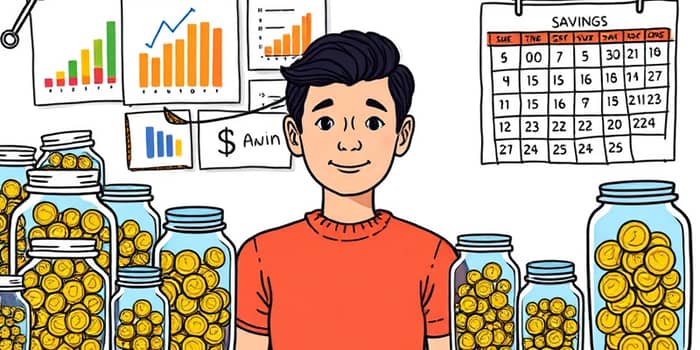
Traditional advice on saving money often stops at “open a savings account.” That’s a start, but truly effective savers harness psychology, technology, and strategy to accelerate their progress. In this article, you’ll learn how to make saving a non-negotiable bill by weaving automated systems and powerful goal-setting techniques into your financial routine. Prepare to unlock a transformative approach that propels you well beyond basic banking.
The Power of Behavioral Automation
The human brain craves simplicity. When saving feels like another to-do item, it’s easy to skip it. The antidote is automation: craft a system that quietly redirects funds before they ever reach your spending account. Start with your employer’s payroll—split your direct deposit so that a fixed percentage of your paycheck lands in a high-yield savings account.
Next, program recurring transfers from checking to savings on a weekly or monthly cadence. Banks and apps offer “round-up” features that collect spare change, moving pennies at a time into your reserve. Each small deposit compounds over time, illustrating how automate transfers for effortless saving consistently builds momentum.
Manual saving relies on willpower—and we all know how fleeting that can be. Studies show that people who automate savings contributions are far more likely to hit long-term targets. Think of these systems as financial autopilot: they shield your goals from impulsive spending and guard against forgetfulness.
Purpose-Driven Goal Setting
Saving without a clear destination is like sailing without a compass. Begin by defining distinct objectives—emergency fund, home down payment, dream vacation, or early retirement. For each, specify the target amount, timeline, and required monthly contribution. This structured clarity transforms abstract desires into actionable steps.
Document your goals in a dedicated journal or digital tool, and revisit them regularly. Visual aids, like progress charts or vision boards, can reinforce motivation. When you cross off a mini-milestone, celebrate it—small wins fuel long-term commitment. By asking “why” behind each goal, you root your saving habits in personal values, creating an emotional tether that keeps you engaged.
Consider a real-world example: if you aim to save $6,000 for an emergency fund in a year, commit to transferring $500 each month. If you miss a transfer, adjust your next contribution or your timeline. This flexibility ensures you stay accountable without risking discouragement. Remember to clarify specific amount and deadline to maintain unwavering focus.
Budget Frameworks as Strategic Templates
A budget is more than a ledger; it’s a strategic blueprint. Selecting the model that resonates with your lifestyle and income patterns determines how you allocate each dollar. Below are popular frameworks—choose one, then customize it to your reality.
- 50/20/30 Rule: Devote 50% of net income to needs, 20% to savings and debt, and 30% to wants. Ideal for balanced spending in moderate cost-of-living areas.
- 80/20 Approach: Allocate 20% directly to savings, letting 80% cover all expenses. Perfect for those who prefer fewer categories and greater simplicity.
- 70/20/10 Split: Reserve 70% for daily living, 20% for debt payoff or additional savings buckets, and 10% to core savings. Offers extra flexibility for aggressive debt reduction.
- 1/3–1/3–1/3 Method: One third for necessities, one third for discretionary items, and one third for savings. Suited to high earners or anyone seeking rapid progress.
Each template carries trade-offs. The 50/20/30 rule helps balance life and saving but may be challenging in high-rent markets. The 1/3 rule demands discipline but accelerates wealth building. The key is consistency—pick a framework that feels sustainable and align it with your goals.
Tracking Progress with Insight
What gets measured gets managed. By meticulously recording every expense, you gain clarity on where your money flows. Use budgeting apps, spreadsheets, or a good old-fashioned notebook to log transactions for at least one month. Classify each expense as “need” or “want” to expose overspend areas.
Beyond categorization, schedule regular financial check-ins—weekly or monthly sessions where you compare actual performance against your budget template and goals. Identify variances, ask why they occurred, and decide on corrective actions. This iterative process acts like a flight instrument panel, guiding you smoothly toward your destination.
Integration tools can automate categorization using machine learning, syncing with your accounts in real time. Yet, occasionally review raw data manually to catch anomalies. Turning data into strategic decisions is the hallmark of disciplined savers.
Uncovering Hidden Cash in Everyday Life
Strategic savers treat every expense as negotiable. Beyond deliberate budgeting, execute a line-by-line audit of your regular outflows to reclaim idle funds. Common categories hide surprising opportunities for savings:
- Subscriptions & Memberships: Cancel or pause underused streaming services, software subscriptions, and club fees.
- Utility and Energy Bills: Insulate your home, switch providers, negotiate discounts, and unplug “vampire” appliances when not in use.
- Grocery and Dining Habits: Plan meals weekly, buy in bulk, and set a strict dining-out budget.
Simultaneously, examine insurance premiums and telecom plans—small rate reductions can free up dozens of dollars each month. By systematically targeting each category, you audit and eliminate hidden expenses and release additional capital for what truly matters.
One saver I know reclaimed over $300 monthly by renegotiating internet and cable plans alone, then redirected that amount into a travel fund, reaching their goal six months earlier than planned.
Advanced Optimization Tactics
With foundational systems in place, elevate your approach through nuanced strategies that amplify results. These tactics require intention but can unlock exponential savings potential over time:
- Goal Laddering: Arrange priorities so that completing a smaller objective unlocks resources for the next. For example, finish your emergency fund, then divert that contribution toward a home down payment.
- Lump-Sum Deployment: Instead of dispersing annual bonuses over spending, allocate them directly to high-priority goals, creating an instant velocity boost.
- Side-Income Integration: Monetize passions—freelance writing, tutoring, or crafting—and assign that income exclusively to your savings accounts.
- Repurposing Paid-Off Payments: When a loan or subscription ends, roll the former payment amount into your savings, preserving the discipline without increasing expenses.
Consider this scenario: after paying off a car loan, one individual seamlessly transitioned the $350 monthly payment into their mortgage down-payment fund. Within two years, they saved over $8,000 without consciously tightening their belt.
Building a Durable Savings Habit
The ultimate secret is embedding saving into your identity. When your systems align with daily behaviors, you no longer debate contributing—they happen automatically. Here are techniques to reinforce this transformation:
• Use visual trackers—progress bars, jars, or digital widgets—to celebrate accumulated victories.
• Engage in community challenges or friendly competitions to sustain accountability.
• Adopt a “no-negotiation” mindset around your automated transfers, treating them like rent or utilities.
Leverage habit-forming principles: cue, routine, reward. Let the paycheck deposit be the cue, the automated transfer the routine, and the growing balance the reward. Repeat consistently, and saving becomes second nature.
Strategic saving transcends the simplicity of a bank account, inviting you into a world of optimization and intentionality. By harnessing automation, defining sharp goals, selecting fitting budget frameworks, tracking diligently, and exploring advanced tactics, you pave a clear path to financial freedom. Begin today—set your systems, write your goals, and watch as each small action compounds into life-changing results.
References
- https://www.53.com/content/fifth-third/en/financial-insights/personal/saving-budgeting/6-strategies-to-grow-your-savings-account.html
- https://www.northcountrysavings.bank/blog-article/20-brilliant-easy-ways-save-money
- https://www.firstmerchants.com/resources/learn/blogs/blog-detail/resource-library/2023/07/07/5-money-saving-strategies-to-maximize-your-savings
- https://www.vacu.org/learn/saving/10-savings-strategies
- https://blog.umb.com/personal-banking-tips-top-six-savings-tips-for-building-and-optimizing-your-savings-plan/
- https://verdecm.com/mastering-the-art-of-saving/
- https://www.northwest.bank/news-insights/you-saved-your-money--now-what/
- https://www.bankatfirst.com/personal/discover/flourish/seven-money-saving-tips-you-might-overlook.html
- https://www.beyondbank.com.au/blog/managing-money/creating-a-savings-habit/
- https://moneysmart.gov.au/saving/simple-ways-to-save-money
- https://bettermoneyhabits.bankofamerica.com/en/saving-budgeting/ways-to-save-money
- https://srfs.upenn.edu/financial-wellness/browse-topics/budgeting/popular-budgeting-strategies
- https://www.valley.com/personal/insights/banking-101/your-guide-to-saving
- https://www.youtube.com/watch?v=5eqpUsUZXtE
- https://www.youtube.com/watch?v=GPm1CO4SRME