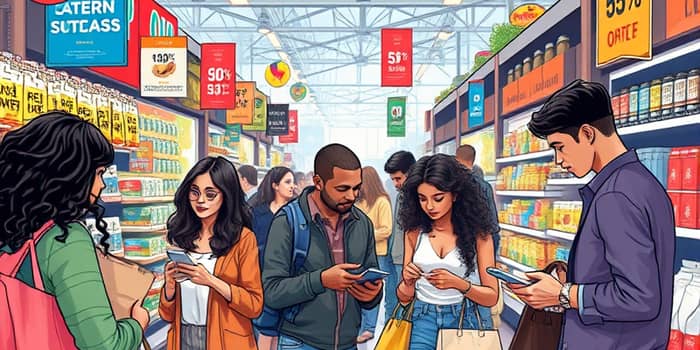
In an era of tightening budgets and rising prices, consumers aren’t retreating—they’re becoming more intentional. Smart spending means making every dollar count by blending research, value-seeking behavior, and strategic timing.
The Changing Landscape of Consumer Spending
Overall spending growth slowed from 5.7% in 2024 to 3.7% in 2025, with actual dollars spent climbing by only 0.4%. Yet beneath these figures lies a story of engagement: clicks rose 18% and orders grew 12%, signaling that people are browsing and planning more than ever before. Consumers research longer before committing and adjust plans anticipating inflation and tariffs.
Inflation concerns top the list for 43% of U.S. shoppers, while 29% cite tariffs as a significant worry. As a result, all income segments are trimming nonessentials—from gourmet coffees to spontaneous vacation splurges. Even everyday purchases endure extended scrutiny, reflecting a broader shift toward deliberate, value-driven decisions.
Key Trends Shaping Smarter Purchases
Multiple data points reveal that today’s shoppers engage more but spend less per transaction. Average order value dropped 10% as consumers trade down to lower price points, favoring planned lists over impulse buys. Conversion rates fell 5%, indicating longer comparison journeys and the rising influence of deal platforms over traditional loyalty programs.
- Clicks increased 18% year-over-year, but spending grew only 0.4%
- Average order value declined 10%, favoring essentials
- Conversion rates dropped 5% amid extended research
- Coupons and generic brands attract more attention
Category-Specific Strategies for Value
Shoppers differentiate essential categories from discretionary ones. Health & Beauty, Apparel, and Home & Garden each saw AOV increases, while Computers & Electronics experienced slight declines. Grocery aisles brim with private labels as consumers seek everyday savings.
This table highlights how consumers are willing to pay more for essentials but remain cautious with high-ticket electronics, prioritizing quality items at careful prices.
Generational Differences in Spending Habits
Age groups show distinct patterns. Gen Z slashed spending by 13% in early 2025, trimming apparel and electronics budgets, and plans to reduce holiday outlays by 23%. Millennials mirror this caution, delaying discretionary buys and hunting for deals. Baby Boomers remain the least price-sensitive, often sticking with brands they trust rather than seeking generics.
- Gen Z: High deal-seekers, open to resale markets
- Millennials: Value-focused, plan purchases meticulously
- Baby Boomers: Brand loyal, less swayed by discounts
Practical Tactics for Becoming a Savvy Shopper
Smart spenders adopt a toolkit of tactics before checkout. Budgeting tools allow them to set spending caps, while early shopping—especially for back-to-school items—spreads costs across weeks. Coupon platforms and deal aggregators beat loyalty programs in many cases, offering immediate savings without lock-in commitments.
- Define strict budgets and track expenses
- Hunt discounts on specialized coupon sites
- Opt for private labels and generic brands
- Explore second-hand and resale marketplaces
- Conduct extended research and read user reviews
What Brands Can Do to Thrive
In this environment, brands must adapt by embracing transparency and education. Providing comprehensive product details, genuine customer testimonials, and clear pricing builds trust. Diversify partnerships beyond loyalty programs by collaborating with deal platforms and commerce solutions that align with consumer habits.
Recognize seasonal spending shifts: early holiday promotions, back-to-school budgeting, and summer value events. Implement multi-touch attribution models to measure effectiveness across the entire journey, rather than single-session conversions.
Looking Ahead: Preparing for the Future
Economic uncertainty—driven by fluctuating inflation, evolving tariffs, and potential rate changes—will keep shoppers vigilant. However, high engagement rates present ample opportunities for brands to influence decisions through strategic touchpoints. By offering educational content, flexible payment options, and authentic community engagement, companies can differentiate themselves.
Gen Z’s projected $12 trillion spending power by 2030 underscores the need to cater to digitally native, deal-savvy audiences. Brands that invest in innovative, consumer-centric experiences today will secure loyalty for years to come.
Conclusion: Embrace Smart Spending
Smart spending in 2025 is about empowerment and intentionality. Shoppers everywhere are not buying less—they’re buying more wisely. By prioritizing value, engaging in thorough research, and leveraging discounts, consumers can stretch every dollar further. Brands that align with these behaviors—offering transparency, flexibility, and multi-channel engagement—will emerge as leaders in the new retail reality.
References
- https://impact.com/affiliate/consumer-spending-trends-2025/
- https://www.intelligentaudit.com/blog/stalled-spending-in-2025-what-the-data-reveals
- https://www.pwc.com/us/en/industries/consumer-markets/library/gen-z-consumer-trends.html
- https://www.goodman.com/about-goodman/insights/how-consumers-are-spending-in-2025
- https://www.mckinsey.com/industries/consumer-packaged-goods/our-insights/state-of-consumer
- https://www.hftp.org/news/4126705/smart-spending-in-2025-for-greater-cost-effectiveness
- https://newsroom.bankofamerica.com/content/newsroom/press-releases/2025/07/confronted-with-higher-living-costs--72--of-young-adults-take-ac.html
- https://www.deloitte.com/us/en/insights/industry/retail-distribution/consumer-behavior-trends-state-of-the-consumer-tracker.html
- https://www.bcg.com/publications/2025/for-cmos-the-future-starts-with-smarter-spending