For decades, Gross Domestic Product has been the gold standard for gauging national success. Yet as societies face complex challenges—from social inequality to environmental crises—it’s clear that GDP alone cannot capture the full tapestry of human welfare. This article explores why GDP falls short in representing real human progress and how alternative indicators offer a richer, more compassionate portrait of collective well-being.
The Power and the Blind Spots of GDP
Gross Domestic Product measures the total monetary value of goods and services produced within a country’s borders. It became dominant during World War II to monitor production capacity and has since shaped policy, investment, and public perception. Yet its celebrated simplicity masks significant omissions.
GDP tracks only market transactions. It overlooks non-market activities such as unpaid childcare, volunteer work, and household labor—efforts that sustain families and communities. By ignoring these vital contributions, GDP perpetuates a narrow focus on market transactions and undervalues the social fabric that underpins economic life.
Case Studies Revealing GDP’s Shortcomings
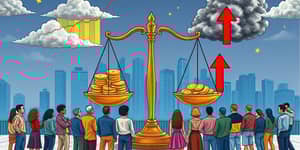
Real-world examples highlight how national averages can obscure local realities and deepen misconceptions. In the United States, between 2001 and 2021, GDP grew by 45.4%, yet regional disparities were stark: San Francisco’s GDP rose by 87.4%, while New Orleans experienced a 5.2% decline. Such imbalances reveal that aggregate growth can leave entire communities behind.
Meanwhile, average American incomes have risen by less than half the rate of per capita GDP growth in recent years. This divergence underscores how rising output does not automatically translate into shared prosperity or improved quality of life. When peoplepay for cleanup after pollution or disaster, those costs feed into GDP as “growth,” even though they reflect social harm. This is what economist George Monbiot meant when he described the problem with GDP as “the gross bit,” since it fails to subtract negative externalities count as growth.
Voices Challenging the GDP Paradigm
Prominent thinkers have long decried GDP’s limitations. Writing in 1968, Robert F. Kennedy famously declared that GDP measures “everything except that which makes life worthwhile.” Nobel laureate Amartya Sen argued for a broader conception of development focused on “expanding the real freedoms that people enjoy,” rather than simply maximizing output.
These critiques highlight that true economic health must embrace dimensions far beyond production totals. When policymakers fixate on GDP as the ultimate benchmark, they risk overlooking critical aspects of human flourishing: from access to education and healthcare to environmental stewardship and social cohesion.
Embracing Holistic Measures of Progress
Recognizing GDP’s blind spots, researchers and governments have developed alternative metrics that paint a fuller picture of well-being. These indicators integrate social, environmental, and economic factors to guide more balanced decision making.
- Human Development Index (HDI): Combines life expectancy, education, and per capita income into a composite score that reflects broader quality of life.
- Genuine Progress Indicator (GPI): Adjusts GDP by accounting for income distribution, environmental costs, and the value of household and volunteer work.
- Better Life Index (OECD): Evaluates housing, income, jobs, community, education, environment, governance, health, life satisfaction, safety, and work-life balance.
- Gross National Happiness (GNH): Used in Bhutan to measure psychological well-being, cultural diversity, good governance, and ecological resilience.
- Inequality Measures: Tools like the Gini coefficient and income share metrics reveal whether growth is inclusive or concentrated among the wealthiest.
Comparing Indicators at a Glance
A concise comparison helps illustrate how these measures differ from GDP and from each other.
Policy Implications and a Path Forward
Relying solely on GDP can steer policy toward short-term production gains at the expense of social equity and environmental integrity. By contrast, integrating alternative indicators into official reporting encourages governments to invest in education, healthcare, renewable energy, and social safety nets.
Public awareness and leadership are key. Citizens can advocate for regular publication of multi-dimensional metrics alongside GDP. Educators and media outlets can highlight stories of communities thriving under alternative frameworks. Policymakers can pilot pilot programs that allocate funding based on well-being outcomes rather than pure output.
Adopting a more inclusive approach to measurement also fosters resilience. In the face of climate change, pandemics, and inequality, societies grounded in multi-dimensional measures of human well-being are better equipped to adapt and prosper collectively.
Conclusion: Towards True Well-being
GDP remains a useful tool for assessing economic activity, but it is far from sufficient. To build more equitable, sustainable, and joyful societies, we must embrace metrics that honor the full spectrum of human experience.
By measuring what truly matters—health, education, community, environment, and happiness—we can shift priorities toward policies that lift all individuals and safeguard the planet for future generations. In doing so, we transform statistics into stories of real progress and ensure that economic health aligns with human fulfillment.
References
- https://pmc.ncbi.nlm.nih.gov/articles/PMC6198784/
- https://www.lisep.org/content/gdp-poor-measure-of-nations-economic-health-says-ludwig-institute-report
- https://www.stlouisfed.org/open-vault/2023/apr/three-other-ways-to-measure-economic-health-beyond-gdp
- https://www.visionofhumanity.org/the-problem-with-gdp/
- https://www.khanacademy.org/economics-finance-domain/macroeconomics/macro-economic-indicators-and-the-business-cycle/macro-limitations-of-gdp/a/how-well-gdp-measures-the-well-being-of-society-cnx
- https://www.imf.org/en/Publications/fandd/issues/Series/Back-to-Basics/gross-domestic-product-GDP
- https://www.khanacademy.org/economics-finance-domain/ap-macroeconomics/economic-iondicators-and-the-business-cycle/limitations-of-gdp/a/lesson-summary-the-limitations-of-gdp
- https://hbr.org/2019/10/gdp-is-not-a-measure-of-human-well-being