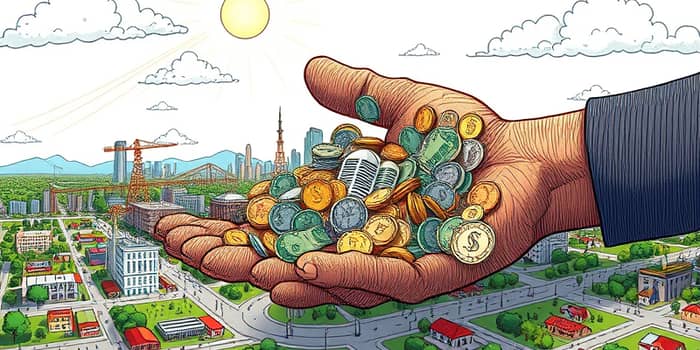
In times of prosperity and crisis alike, fiscal policy stands as a defining force guiding the economic destiny of nations. By skillfully adjusting taxation, spending, and transfers, governments can shape markets, influence growth, and foster social equity.
The Essence of Fiscal Policy
At its core, fiscal policy refers to the government’s strategic use of taxation, spending, and transfers to influence macroeconomic outcomes. These tools allow policymakers to manage inflation, steer employment levels, and regulate the flow of money throughout the economic system.
The theories underpinning modern fiscal interventions trace back to John Maynard Keynes, who argued that increasing or decreasing revenue and expenditure levels could stabilize economies during downturns and overheated expansions. Today, his legacy informs decisions from national budgets to targeted stimulus packages.
Three Pillars: Spending, Taxation, Transfer Payments
Fiscal policy operates on three fundamental pillars, each with distinct channels of influence:
- Government spending — Direct expenditures on infrastructure, education, healthcare, and public services inject capital into the economy, creating jobs and fostering long-term productivity.
- Taxation — By adjusting income, corporate, and consumption taxes, governments can either withdraw purchasing power or leave households and businesses with more resources to spend or invest.
- Transfer payments — Programs such as unemployment insurance, welfare benefits, and social pensions redistribute income, supporting households during downturns and reducing poverty.
Through these pillars, fiscal policymakers wield a delicate balance: stimulating growth where needed and moderating excess where risks of inflation loom.
Stabilizing Economies: Mechanisms at Play
Fiscal policy affects aggregate demand via direct and indirect channels. Government spending directly injects funds, while tax changes alter private sector behavior. Together, these interventions can either amplify or dampen economic fluctuations.
- Direct impact on aggregate demand — Large-scale infrastructure and service investments can sustain consumer confidence even when private sector spending falters.
- Automatic stabilization — Progressive taxes and unemployment benefits function as automatic stabilizers in action, rising revenues during booms and providing support during recessions without new legislation.
- Discretionary fiscal policy — When timely action is vital, policymakers enact deliberate tax cuts, spending hikes, or enhanced transfers to counteract shocks.
Policy in Action: Expansionary vs. Contractionary
During recessions, expansionary fiscal policy takes center stage. Governments may boost spending on public works, reduce taxes, or increase benefits to encourage consumption and investment. Such interventions aim to revive demand, accelerate job creation, and lower unemployment.
Conversely, in periods of rapid growth and rising inflation, contractionary fiscal policy becomes essential. By cutting spending or raising taxes, authorities can moderate demand, stabilize prices, and prevent overheating that could lead to unsustainable bubbles.
Throughout, policymakers weigh trade-offs: urgent stimulus may risk higher deficits, while fiscal restraint can slow momentum if applied too sharply.
Collaboration with Monetary Policy
Fiscal and monetary policy often work in concert to achieve macroeconomic stability. While fiscal tools mold tax receipts and public spending, central banks adjust interest rates and manage the money supply.
By coordinating these approaches, governments and central banks can more effectively navigate complex business cycles, harnessing combined policy efforts for stability.
Historical Case Studies: Lessons from Crises
The COVID-19 pandemic demonstrated the power of swift fiscal responses. Across the globe, governments implemented furlough schemes, direct payments, and enhanced unemployment benefits to sustain livelihoods and prevent economic collapse.
Similarly, during the 2007–2009 financial crisis, stimulus packages featuring infrastructure investment and tax incentives helped
to shore up aggregate demand and restore confidence, illustrating how decisive action can shorten downturns and accelerate recovery.
Challenges, Politics, and Future Directions
Despite its potency, fiscal policy faces significant hurdles. Timing lags—from data collection to legislative approval—can delay crucial interventions. Political dynamics often shape priorities, potentially undermining sound fiscal policy implementation is essential.
Moreover, high deficits and persistent debt raising require careful management to avoid precursor to macroeconomic instability. Balancing immediate needs with long-term sustainability remains a defining challenge for any government.
Looking ahead, fiscal authorities must emphasize equitable growth and environmental resilience. By prioritizing investments in clean energy, education, and healthcare, policymakers can foster long-term development and poverty reduction.
International cooperation will also play a vital role. Multilateral institutions can support countries in designing reforms that enhance transparency, improve tax collection, and channel resources towards sustainable projects.
Ultimately, fiscal policy is not just an economic tool—it is a social contract between governments and citizens, reflecting collective values and aspirations. When wielded wisely, it can transform markets, uplift communities, and chart a path toward a more prosperous, equitable future.
References
- https://books.core-econ.org/the-economy/macroeconomics/05-macroeconomic-policy-06-governments-and-fluctuations.html
- https://www.poems.com.sg/glossary/financial-terms/fiscal-policy/
- https://www.businessnewsdaily.com/3484-fiscal-policy.html
- https://www.abacademies.org/articles/the-role-of-fiscal-policy-in-shaping-business-environments-17710.html
- https://www.khanacademy.org/economics-finance-domain/ap-macroeconomics/national-income-and-price-determinations/fiscal-policy-ap/a/lesson-summary-fiscal-policy
- https://www.cbo.gov/topics/economy/economic-effects-fiscal-policy
- https://app.achievable.me/study/finra-series-65/learn/economic-factors-and-business-information-basic-economic-concepts-fiscal-policy
- https://www.imf.org/en/publications/fandd/issues/series/back-to-basics/fiscal-policy
- https://www.alliocapital.com/macroscope/fiscal-policy-tools-types-examples
- https://www.brookings.edu/articles/fiscal-politics-the-missing-link-between-fiscal-policy-and-gender-equality/
- https://www.worldbank.org/ext/en/topic/economic-policy/fiscal-policy