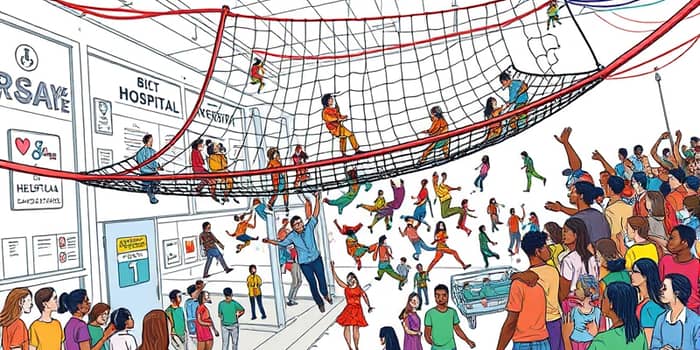
At the intersection of crisis and care, emergency departments (EDs) stand as the ultimate guardians of community well-being. These crucial facilities operate around the clock, welcoming patients from all walks of life without asking a single question about their ability to pay. In doing so, they form an unshakable safety net, tirelessly catching lives at their most vulnerable moments.
In a world beset by unforeseen challenges—from mental health crises to pandemics—EDs have transcended traditional roles. They have evolved into dynamic hubs of public health stewardship, offering screening and treatment for conditions like HIV, hepatitis C, opioid use disorder, and acute psychiatric needs, all while serving as barometers for systemic failures.
Historical Evolution of Emergency Departments
Since their inception in the mid-20th century, EDs were conceived as trauma centers for acute injuries. Over decades, they have transformed into comprehensive care sites, integrating innovative diagnostics, telehealth consultations, and community outreach programs.
Today, EDs serve vulnerable populations 24/7, providing lifesaving interventions regardless of insurance status. This expansion reflects a broader mission: to not only treat immediate threats but to detect silent epidemics, such as infectious diseases and untreated mental health disorders, before they spiral out of control.
However, this evolution has not been without friction. The closure of safety-net EDs in both urban and rural areas erodes healthcare equity, leaving swaths of the population without timely access to critical services. Each shuttered department represents a tear in the communal safety net, with profound ripple effects on health outcomes.
Current Challenges Facing ED Safety Nets
Despite their resilience, EDs face mounting pressures that threaten to weaken their foundations. Staffing shortages, inflated costs, and surging patient volumes driven by unmet social needs have strained resources to the brink.
- Frequent utilization by patients lacking stable housing or mental health support
- Financial instability due to cost-shifting and inadequate reimbursement
- Rising rates of chronic and behavioral health conditions
- Closure of rural and urban safety-net hospitals
These challenges underscore the urgent need to reinforce EDs not just as treatment centers, but as integrators of social care, preventing avoidable crises before they ignite.
Components of an Unshakeable Safety Net
Building a safety net for emergency care requires borrowing principles from physical fall-protection nets. Precision engineering ensures safety nets operate with mesh size with ≤100mm openings to prevent injuries. In healthcare, a comparable approach demands meticulous coordination across multiple layers of service.
Just as high-tensile ropes distribute force and anchor nets, robust policies and community partnerships absorb the impact of health crises. Policies must be as dependable as border ropes rated at ≥30 kN, binding each component of care into a unified framework.
ED clinicians, public health officials, and policymakers must collaborate in a comprehensive policy and clinical innovation ecosystem, ensuring no patient slips through the gaps.
Empowerment Strategies for Lasting Resilience
To transform EDs into truly unshakeable safety nets, stakeholders must embrace proactive strategies that span clinical care, social support, and financial stability. Below are key approaches to fortify this protective network:
- Implement targeted outreach programs connecting high utilizers with primary care and housing services
- Advocate for sustainable funding models that eliminate cost-shifting burdens
- Integrate mental health professionals and peer support specialists into ED teams
- Develop interoperable data systems to bridge gaps between medical and social services
- Foster community paramedicine initiatives to deliver care in nontraditional settings
- Promote equity-focused research addressing discrimination and social determinants
By weaving these threads together, communities can build a multi-layered net—combining medical expertise with social innovation—that catches individuals long before emergencies escalate.
Looking Ahead: Future Directions
As we envision the next chapter of emergency care, a resilient safety net must incorporate emerging technologies, policy reforms, and workforce enhancements. Investing in telehealth capabilities and mobile clinics will extend reach into underserved areas, while telepsychiatry can alleviate mental health bottlenecks.
- Expand community-based screening and preventive services
- Strengthen disaster preparedness through cross-sector collaborations
- Enhance workforce resilience with training and psychosocial support
The path forward demands continuous adaptation, rigorous evaluation, and a steadfast commitment to address social determinants of health, ensuring that every thread in the net remains taut and capable of withstanding new stresses.
Conclusion: A Call to Action for Equity
Emergency departments embody our collective promise to care for one another in moments of dire need. Yet, this promise can only be honored if we actively reinforce the structures that uphold it—through policy, innovation, and unwavering advocacy.
By championing equitable funding, integrating social services, and fostering collaborative partnerships, we can maintain an unshakeable safety net that empowers individuals and communities to weather life’s unexpected storms. Let us rise to this challenge, united in our belief that healthcare is a human right and that no one should ever fall beyond our reach.
References
- https://pubmed.ncbi.nlm.nih.gov/40084221/
- https://jackwinsafety.com/what-is-a-safety-net/
- https://www.emra.org/books/advocacy-handbook/em-safety-net
- https://pmc.ncbi.nlm.nih.gov/articles/PMC10811715/
- https://pmc.ncbi.nlm.nih.gov/articles/PMC10527835/
- http://www.osha.gov/laws-regs/regulations/standardnumber/1926/1926.105
- https://icisf.org/strategic-partners/
- https://en.wikipedia.org/wiki/Safety_net
- https://www.sistertabletalk.org/2025/12/part-ii-build-your-safety-net-stability.html
- https://marketplace.safetyculture.com/us/blog/understanding-safety-nets-as-a-type-of-fall-protection
- https://www.care.org/news-and-stories/care-on-capitol-hill-2026/
- https://lntsufin.com/blog/types-of-safety-nets-everything-you-need-to-know/
- https://wfpusa.org/news/whats-a-safety-net/
- http://www.osha.gov/etools/construction/falls/safety-net