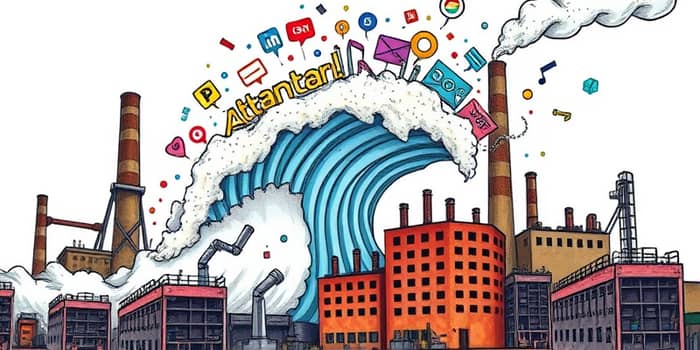
In an age defined by rapid change, disruptive innovations have become the catalysts for entire market revolutions. From affordable streaming services to electric vehicles, new entrants challenge the status quo and inspire us to rethink what’s possible.
Defining Disruptive Innovation
The concept of disruptive innovation was coined by Clayton Christensen. It describes how nimble entrants introduce simpler, more affordable offerings that serve overlooked segments. Initially dismissed by incumbents, these innovations steadily improve and ultimately capture mainstream attention, transforming entire industries.
At its core, disruptive innovation thrives in niches. New-market disruptions unlock territories where nonconsumers exist, while low-end disruptions target price-sensitive customers. As improvements accumulate, the gap between challengers and established players narrows, prompting a seismic shift.
Key Characteristics of Disruptive Innovations
Understanding what sets disruptive innovations apart from sustaining ones is crucial for leaders and entrepreneurs seeking to harness their power.
- Market Entry at the Margins: Disruptors begin in segments that incumbents overlook, avoiding direct confrontation.
- Cost-Effectiveness and Accessibility: Affordable solutions democratize access, opening doors for wider adoption.
- Rapid Iterative Improvement: Feedback loops accelerate product evolution, turning early limitations into strengths.
- Technology-Driven Transformation: Advances in AI, automation, and digital platforms fuel new capabilities.
- Novel Business Models: Peer-to-peer networks and subscription services redefine how value is created and delivered.
Types of Disruption
Disruptive innovations typically fall into two categories, each with unique pathways to market dominance.
- Low-End Disruption: Challengers offer basic, affordable alternatives that attract price-sensitive customers. Over time, these offerings improve, drawing broader audiences away from premium incumbents.
- New-Market Disruption: Innovators tap into previously unmet needs, creating entirely new markets and converting nonconsumers into active users.
Impact on Industries: Case Studies
Real-world examples illustrate how disruptive forces reshape old market realities, often with dramatic results.
The transformation is evident: brick-and-mortar retailers must now compete with e-commerce giants, taxi medallions have lost value, and energy markets are shifting toward renewables.
Historical and Modern Examples Across Sectors
Disruption has long been part of the innovation landscape:
- Technology: Personal computers challenged mainframes; smartphones displaced both PCs and standalone electronics.
- Retail: Online marketplaces now account for over 15% of global sales, eclipsing countless physical stores.
- Finance: Mobile payment platforms empower small merchants, circumventing traditional banking systems.
- Education: Gamified language apps reached hundreds of millions, redefining learning accessibility.
- Energy: Solar financing models enabled residential adoption at unprecedented scale.
Quantitative Market Impact
Disruptive innovations not only alter industry narratives but also deliver staggering numbers that validate their transformative power. Global e-commerce sales topped $6 trillion in 2025, growing at a 20% annual rate. Streaming subscribers, ride-sharing users, and electric vehicle buyers now number in the hundreds of millions, underscoring the reach of these phenomena.
Innovation Types Relevant to Disruption
Two additional classifications help explain how breakthroughs emerge:
- Radical Innovation: Introduces completely new solutions, like the touchscreen smartphone combined with an app ecosystem.
- Architectural Innovation: Reconfigures existing technologies, such as hybrid powertrains that blend electric and combustion engines.
Best Practices for Fostering Disruption
Leaders aiming to create or respond to disruptive forces can follow proven strategies:
- Identify and target underserved market segments where needs go unmet.
- Prioritize simplicity and affordability over complexity and premium features.
- Implement continuous improvement cycles driven by real user feedback.
- Leverage novel distribution or business models to revolutionize value delivery.
- Stay vigilant for emerging technologies—AI, blockchain, renewable energy—that can catalyze new disruptions.
Overcoming Resistance and Challenges
Incumbents often resist disruptive changes due to entrenched processes, risk aversion, and fear of cannibalizing their own offerings. Successful adaptation requires strong leadership, clear communication, and a willingness to embrace experimentation.
For new entrants, barriers include securing funding, navigating regulations, and earning customer trust. Careful stakeholder engagement and transparent value propositions can help mitigate these challenges.
The Future: Emerging Disruptive Forces
Looking ahead, several technologies stand poised to redefine industries once again:
- Artificial Intelligence: Automating decision-making and creating entirely new service models.
- Blockchain: Unlocking transparent, decentralized platforms for finance and supply chain.
- Augmented Reality: Blending digital and physical worlds to transform retail, education, and entertainment.
- Advanced Robotics: Enabling on-demand manufacturing and logistics with minimal human intervention.
As these forces converge, the pace of change will accelerate. Organizations that cultivate agility, foster a culture of innovation, and remain customer-centric will stand poised to lead the next wave of market transformation.
Disruptive innovations remind us that progress often springs from the margins. By embracing new ideas and challenging convention, businesses and individuals alike can shape a future where value is redefined and opportunities abound.
References
- https://www.indeed.com/career-advice/career-development/innovation-disruption
- https://ideascale.com/blog/what-is-disruptive-innovation/
- https://www.qmarkets.net/resources/article/disruptive-innovation-definition/
- https://www.rready.com/blog/types-of-innovation-in-business
- https://www.4strat.com/future/disruptive-innovation/
- https://www.christenseninstitute.org/theory/disruptive-innovation/
- https://www.imd.org/blog/innovation/what-is-disruptive-innovation/
- https://www.masterclass.com/articles/disruptive-innovation
- https://online.fit.edu/degrees/undergraduate/cis/ba-business-administration/disruptive-technology-definition-and-examples/