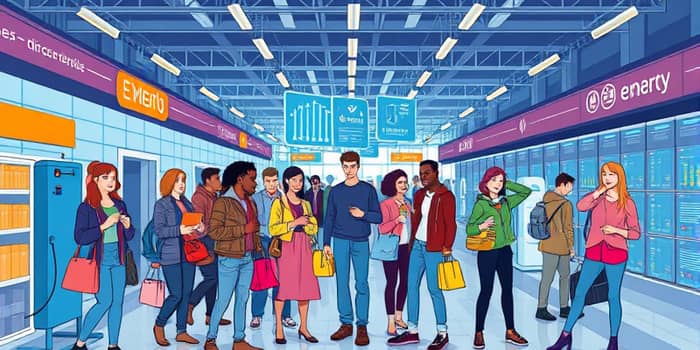
Every time a purchase is made, consumers send powerful signals that ripple through boardrooms, factories, and global markets. Far from passive participants, in 2025 they remain the central force propelling innovation, sustainability, and economic expansion—and sometimes triggering urgent course corrections when expectations go unmet.
In this era of rapid change, consumer spending continues to outpace income growth, nudging companies to adapt strategies or risk losing relevance. The following analysis explores the multifaceted ways consumers shape industries, from fueling the energy revolution to demanding smarter, more personalized goods and services.
Driving Economic Growth Through Spending
In the United States, consumer spending accounts for around 70% of GDP. Even as income growth slows, robust household wealth—up by $13.2 trillion since 2019—and a near five-decade low in unemployment bolster spending power. Forecasts predict U.S. spending growth of 2.4% in 2025, while global growth may hit 6%, according to NielsenIQ.
These figures mask rising tensions. Household debt is climbing, savings rates are dipping, and inflation—measured at 2.4% year-over-year—exerts pressure on budgets. Still, persistent demand drives output and investment across sectors, underscoring the consumer’s role as a chief economic engine.
- Rising household wealth sustains consumption despite inflation concerns.
- Trading down to private labels signals growing price sensitivity.
- Omnichannel shopping demands seamless experiences online and in-store.
Electrification and the Energy Revolution
Consumers are accelerating the shift to clean energy through purchases of electric vehicles and smart home devices. Electricity demand, stagnant for years, is now projected to grow by 2% annually through 2026. Data centers—granularly tied to streaming, cloud usage, and AI applications—will drive U.S. power consumption from 6–8% of generation today to as much as 15% by 2030.
Utilities are responding with record capital expenditures—$174 billion by the end of 2024—with 42% allocated to transmission and distribution. The rise of solar energy, up 30% year-over-year in 2024 and projected to grow 34% in 2025, exemplifies consumer-driven investment in renewables.
Market Dynamics in Consumer Goods
Global retail sales of consumer products reached $7.5 trillion in 2024, though 75% of growth stemmed from price increases rather than volume gains. As volume growth slows—from 7.7% in 2023 to 4.5% in 2024—companies are ramping up marketing and promotions. In fact, 69% plan to increase ad spend and 76% will offer more discounts in 2025.
This tug-of-war between value orientation and brand loyalty has led one-third of consumers to “trade down” in at least one category, while still budgeting for splurges in areas that matter most. Brands must walk a tightrope: offer compelling pricing without eroding perceived quality or loyalty.
- Price-sensitive demand drives promotions and loyalty programs.
- More private labels emerge as consumers seek value.
- Subscription models cater to convenience and cost control.
Digital Transformation and AI Amplify Consumer Voices
Artificial intelligence is now embedded in every stage of the consumer journey. From chatbots guiding product discovery to dynamic pricing engines responding to real-time demand, AI empowers companies to deliver personalized shopping experiences and optimize operations.
Retail media platforms mine data to predict trends, while precision analytics offer instant feedback loops. When consumers voice dissatisfaction on social channels, brands can pivot marketing strategies or adjust supply chain priorities within hours, not months.
Building Resilience Amid Inflation and Disruption
Geopolitical risks—tariffs, shipping bottlenecks, and raw material shortages—compound consumer uncertainty. Companies are reinforcing supply chain resilience through diversification of suppliers, inventory buffers, and nearshoring strategies. These efforts reflect a broader shift toward rapid adaptation and resilience in response to consumer volatility.
Inflation remains a critical challenge. Food prices rose 2.9% over the past year, stretching household budgets. Yet, businesses that innovate—whether by optimizing logistics or automating back-end processes—emerge stronger, delivering stability that reassures cautious consumers.
Consumer Power as a Catalyst for Change
Across energy, technology, retail, and beyond, consumers are demanding cleaner, smarter, and more equitable solutions. Their collective choices have:
- Accelerated the electrification of transportation and home appliances.
- Driven investment in digital channels and advanced analytics.
- Compelled companies to commit to sustainable sourcing and transparent practices.
As data, AI, and social media continue to elevate consumer voices, companies must embrace agility and empathy. The brands that listen, learn, and act swiftly not only survive but thrive in an environment where every purchase casts a vote for the future.
Ultimately, consumer power is both a challenge and an opportunity. By wielding influence wisely—prioritizing sustainability, demanding fairness, and supporting innovation—shoppers can help shape industries that reflect their values and aspirations. In doing so, they become co-authors of progress, guiding markets toward resilience and growth with each transaction.
References
- https://www.westmonroe.com/insights/the-2025-energy-economy-a-new-era-of-growth-disruption-and-uncertainty
- https://www.deloitte.com/us/en/insights/industry/power-and-utilities/power-and-utilities-industry-outlook.html
- https://www.bain.com/insights/consumer-products-report-2025-reclaiming-relevance-in-the-gen-ai-era/
- https://www.deloitte.com/us/en/insights/industry/consumer-products/consumer-products-industry-outlook.html
- https://www.mckinsey.com/industries/consumer-packaged-goods/our-insights/state-of-consumer
- https://www.pwc.com/us/en/industries/consumer-markets/library/consumer-markets-trends.html
- https://www.letshighlight.com/blog/the-real-impact-of-inflation-on-consumer-spending-in-2025
- https://nielseniq.com/global/en/insights/report/2024/mid-year-consumer-outlook-guide-to-2025/
- https://www.leanrs.com/insights/us-consumer-outlook-for-2025