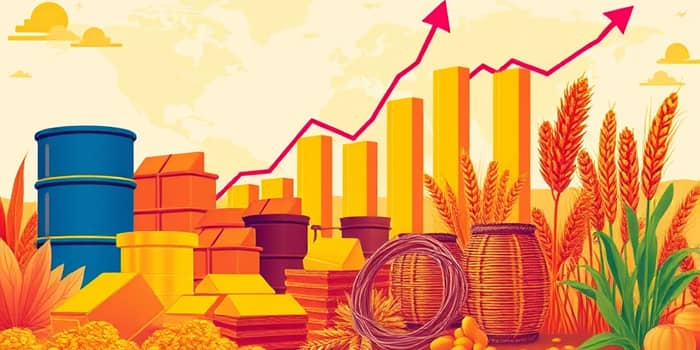
Commodity investing offers a unique path to enrich portfolios by tapping into the fundamental resources that power economies. Through diversified channels—such as futures, ETFs, and commodity stocks—investors can seek inflation hedging and return potential beyond traditional equities and bonds.
Understanding Commodities as Real Assets
Commodities are basic standardized real assets that serve as the building blocks for goods and services worldwide. Unlike stocks or bonds, their value stems from the physical world and the industrial cycles they underlie.
- Energy: crude oil, Brent, WTI, natural gas, gasoline.
- Metals: precious (gold, silver, platinum) and industrial (copper, aluminum).
- Agriculture: grains and softs like wheat, corn, coffee, cotton.
- Livestock: cattle and hogs.
These commodities are fungible and globally traded, meaning that identical units are interchangeable and prices are set by global supply and demand dynamics. Their non‐perishable or soft nature directly links them to weather events, geopolitical shifts, and technological advances.
Diversification, Inflation Hedging, and Real Returns
Adding commodities to a portfolio often smooths volatility and enhances resilience. Historically, broad commodity returns exhibit low or negative correlation with stocks and bonds, so they can outperform during equity market downturns.
When inflation accelerates, commodity prices typically rise in tandem, reflecting their role as core inputs in consumer price indexes. This natural inflation hedge for investors can protect purchasing power when traditional assets falter.
Spot price movements deliver the most direct gains. Futures‐based strategies can capture additional roll yield and collateral yield, though these vary with market conditions and interest rates.
Investment Pathways: From Physical to Derivatives
Investors have multiple avenues to include commodities in their portfolios. Each offers trade‐offs between complexity, cost, and exposure.
- Physical Ownership: bullion for gold and silver, offering direct tangible store of value.
- Futures Contracts: standardized agreements with margining and leverage.
- ETFs and Mutual Funds: convenient exposure via funds tracking commodity indices.
- Commodity Equities: stocks of producers and miners, with dividend potential.
- Alternatives: hedge funds, swaps, and structured derivatives for tailored strategies.
Physical holdings avoid roll costs but incur storage and security fees. Futures deliver precise exposure but demand active management of leverage and margin calls. ETFs and ETNs simplify access but introduce tracking differences and issuer risk.
Managing Risks and Challenges
Commodities are inherently volatile. Unforeseen supply shocks—from OPEC decisions to extreme weather—can trigger dramatic price swings. Regulatory changes, trade sanctions, and environmental policies further heighten uncertainty.
- High Volatility: rapid price movements driven by global events.
- Contango Risk: roll drag when futures curve is upward sloping.
- Complexity: term‐structure, margin management, and liquidity demands.
- Political and ESG Risks: export bans, tariffs, and sustainability concerns.
Investors must balance potential rewards against these challenges, establishing clear risk parameters, and ensuring they grasp the nuances of each vehicle before committing capital.
Conclusion: Incorporating Commodities with Confidence
Commodities stand as a compelling complement to traditional assets, offering both diversification and inflation protection. By understanding their unique drivers and selecting the most appropriate investment pathway, investors can harness the real‐world power of raw materials.
Whether pursuing long‐term real returns through strategic futures rolling or seeking tangible security in precious metals, a thoughtful commodity allocation can fortify a portfolio against volatility and uncertain macro environments. With diligent research, prudent risk management, and disciplined execution, commodity investing can become a foundation for more resilient wealth creation.
References
- https://www.fidelity.com/learning-center/investment-products/mutual-funds/about-commodity-investing
- https://www.baringa.com/en/insights/trading-business-of-tomorrow/commodity-market-trends-2026/
- https://www.usbank.com/investing/financial-perspectives/investing-insights/why-and-how-to-invest-in-commodities.html
- https://www.morganstanley.com/im/en-hk/intermediary-investor/insights/articles/trends-driving-optimism-in-2026.html
- https://www.jpmorgan.com/insights/treasury/forecasting-planning/commodities-market-trends
- https://www.youtube.com/watch?v=r3u3fG8KPFc
- https://brainworksinc.com/commodities-market-outlook/
- https://www.pimco.com/us/en/resources/education/understanding-commodities
- https://blogs.worldbank.org/en/developmenttalk/the-commodity-markets-outlook-in-eight-charts2
- https://www.spglobal.com/spdji/en/education/article/practice-essentials-understanding-commodities-and-the-sp-gsci/
- https://www.spglobal.com/market-intelligence/en/news-insights/research/2026/03/commodity-price-watch-march-2026
- https://www.investing.com/commodities
- https://www.youtube.com/watch?v=2GcE_j1uFZY
- https://tradingeconomics.com/commodities